

MP Khwezi Ka Ceza is Gqeberha-based independent political commentator, community leader and a social activist.
The African Union was founded on an idea larger than borders. It emerged from the painful recognition that Africa’s colonial fragmentation had weakened its people and that continental solidarity was essential for political freedom, economic development and collective dignity. Yet today, that idea is being tested. From South Africa’s recurring anti-foreigner violence to Kenya’s recent controversy over foreign traders, Africa is witnessing the dangerous normalisation of nationalism directed against fellow Africans.
The question is increasingly unavoidable: where is the African Union when Africans turn against Africans?
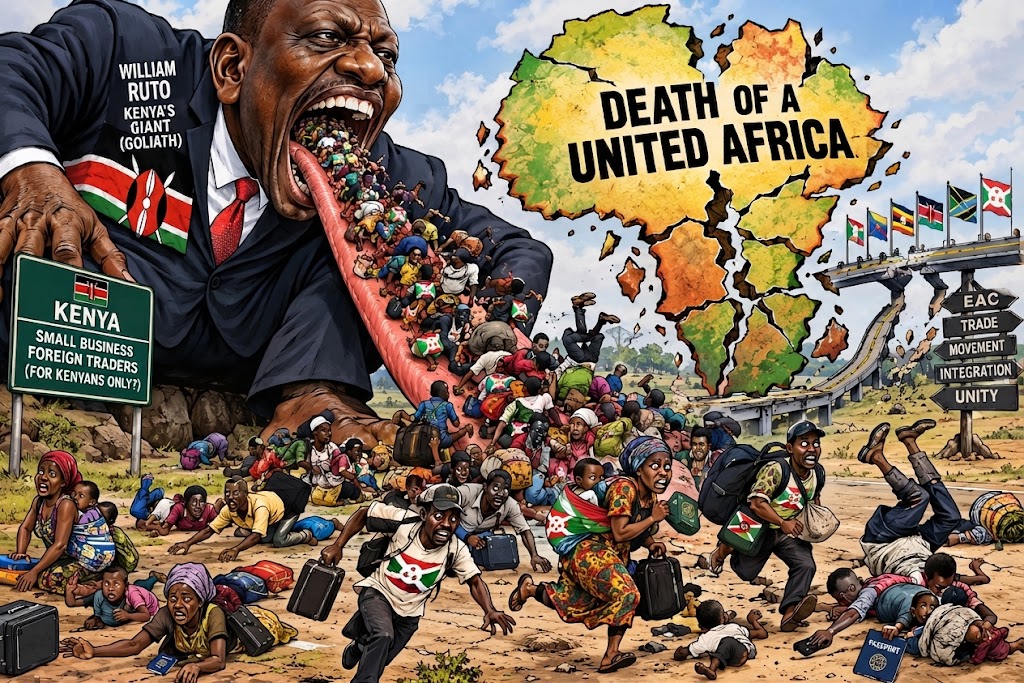
President William Ruto’s recent directive and the subsequent controversy surrounding foreign nationals operating small businesses in Kenya have created anxiety across East Africa. The Kenyan government has since clarified that legally documented foreign traders remain protected and that the measures concern compliance with permits and licences. Yet the political damage was already done. Hundreds of Burundians reportedly gathered at their embassy in Nairobi seeking assistance, fearing that they could be forced to leave. Reuters reported that Kenya subsequently offered temporary registration measures to undocumented East Africans amid widespread anxiety, particularly among Burundians.
This raises an uncomfortable question about implementation. If the principle is simply immigration compliance, then enforcement must be universal, transparent and based on the law rather than nationality, ethnicity or political vulnerability. Why did Burundians appear to experience such immediate fear and disproportionate visibility? Why were ordinary small-scale traders suddenly made to feel that their livelihoods depended on political rhetoric?
The issue becomes even more troubling when placed against the philosophy of the East African Community. The EAC Common Market explicitly promotes the free movement of persons, labour, services and capital, while also recognising the right of citizens of partner states to establish businesses subject to national laws.
Africa cannot preach regional integration in conference halls while creating an atmosphere in which African traders fear one another’s governments.
This is where the African Union’s credibility must be questioned. To be precise, the AU system has not been entirely silent on xenophobia. The African Commission on Human and Peoples’ Rights strongly expressed concern over attacks and vigilante intimidation against foreign nationals in South Africa in April 2026. Ghana also pushed for the issue to be debated at AU level, and the AU later supported a broader continental discussion on migration.
But concern is not the same as consequence.
Statements do not stop mobs. Communiqués do not protect frightened families. Diplomatic language does not rebuild shops, restore livelihoods or compensate people forced to flee countries they legally called home.
South Africa offers the clearest warning of what happens when xenophobia is repeatedly condemned but insufficiently confronted. In 2026, anti-migrant intimidation escalated dramatically, with reports of killings, displacement and thousands of African migrants leaving the country amid growing fear. The United Nations and the African Commission condemned the violence and called for the protection of migrants.
Yet the continent should ask a harder question: why does Africa continue to wait for bloodshed before responding?
The danger is that xenophobia is becoming politically contagious.
A government restricts foreign traders. Another country begins demanding the removal of foreign workers. Political movements discover that blaming outsiders produces applause. Governments facing unemployment, corruption and economic stagnation find convenient scapegoats. Before long, the foreigner becomes responsible for everything: unemployment, crime, housing shortages, collapsing health systems and political failure.
This is how an African Spring of Xenophobia could begin.
And if retaliation starts, what happens next?
Suppose African states begin responding in kind. What happens to Kenyan traders operating elsewhere in East Africa? What happens to South African companies across the continent? What happens to Nigerian, Zimbabwean, Ethiopian, Congolese or Somali entrepreneurs when governments begin calculating citizenship according to political retaliation?
The consequences would be catastrophic for African integration.
Borders would harden. Informal trade would collapse. Businesses would relocate. Diplomatic relations would deteriorate. African governments would begin treating their neighbours’ citizens as bargaining chips. The dream of the African Continental Free Trade Area would become increasingly hollow.
The greatest irony is that Africa would be reproducing the very colonial logic that Pan-Africanism sought to defeat: the idea that an African becomes a threat the moment he crosses an arbitrary border.
President Ruto and other African leaders should therefore understand the political responsibility attached to their words. Immigration regulation is legitimate. No sovereign state can be expected to abandon its laws or permit undocumented economic activity without regulation. But enforcement must be lawful, consistent and non-discriminatory. Selective enforcement creates the perception of ethnic or national targeting, even where that may not have been the stated intention.
The same principle applies to South Africa. Border management is a government responsibility. It cannot be outsourced to mobs, vigilantes or political movements conducting street-level identity checks.
But enforcement must be lawful, consistent and non-discriminatory.
The AU must stop behaving like a continental debating society that becomes vocal only after the damage has been done. It needs a clear continental protocol against xenophobic violence, collective monitoring mechanisms and consequences for governments that tolerate systematic intimidation of fellow Africans.
Africa fought colonialism under the banner of unity. It cannot now destroy that inheritance through economic nationalism and selective hostility towards its own people.
The question confronting the continent is simple: if Africa cannot guarantee Africans dignity in Africa, what exactly does African unity mean?
The factual record currently supports a strong criticism of the adequacy of AU action, but not the absolute claim that both the AU and UN have remained completely silent. The more defensible argument is that their interventions have been reactive, fragmented and insufficiently consequential. That distinction makes the opinion piece stronger and harder to dismiss.