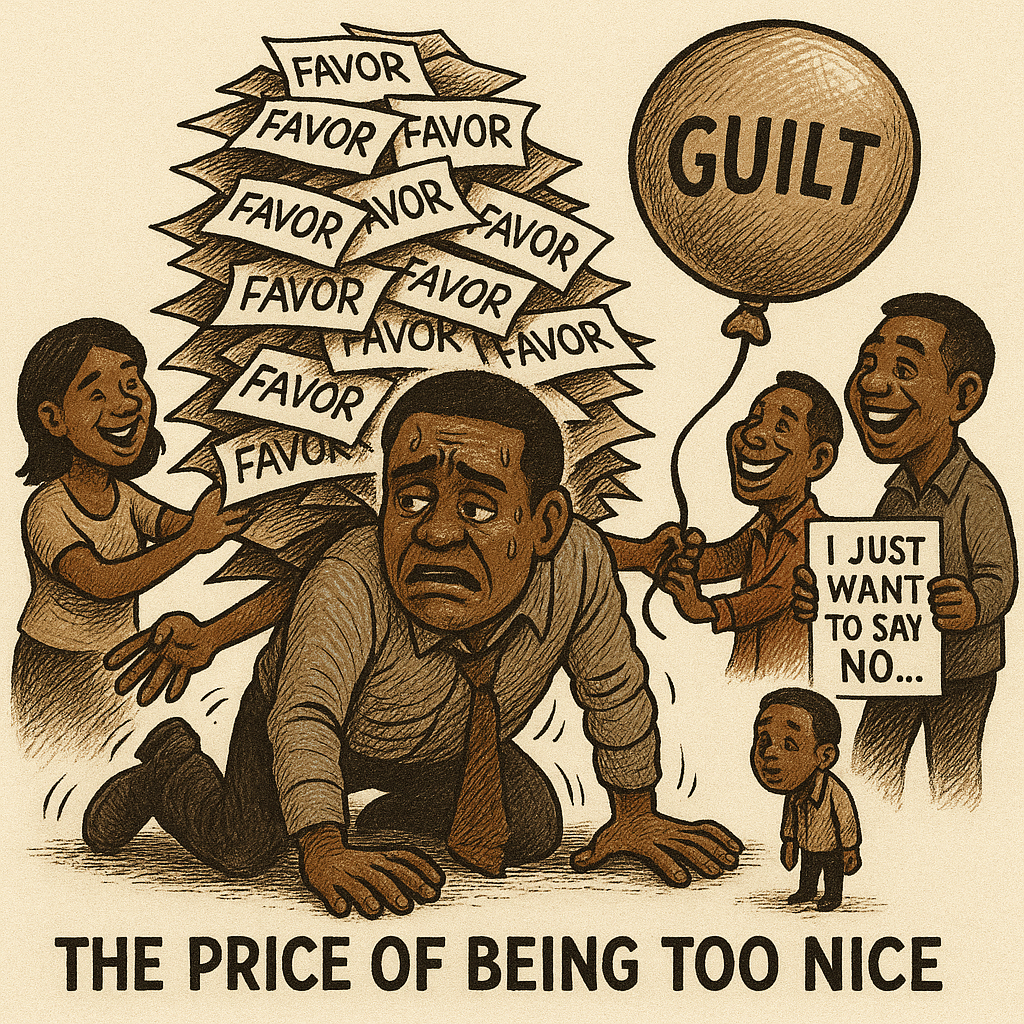
For some people, telling others “NO” feels like betraying them, as such, even when overwhelmed, tired, or emotionally depleted, some individuals still say yes, to favours, to last-minute requests, to things that cost them peace. It’s a pattern that seems generous on the surface but often hides emotional exhaustion, resentment, and silent suffering underneath. Why is it so hard to say no?
At the root of this struggle lies a deep need to be liked, accepted, or validated. Many of us were raised to associate kindness with sacrifice. We were taught that saying yes makes us good and saying no makes us selfish. Add to that cultural, religious, or gendered expectations, especially for women and caretakers, and the guilt of refusing others becomes even more intense.
For some people, telling others “NO feels like a betrayal.
But constantly saying yes at our own expense isn’t noble. It’s unsustainable. People-pleasing can lead to burnout, depression, anxiety, and even attract manipulative people who exploit your kindness. Over time, the inability to assert boundaries chips away at self-worth. You begin to feel used, invisible, or quietly resentful. Ironically, in trying to avoid hurting others, you end up hurting yourself the most.
Psychologists link this pattern to fear, fear of rejection, of not being needed, of being perceived as rude, cold, or unhelpful. In some cases, it’s rooted in childhood trauma, where love and acceptance were conditional on obedience or helpfulness.
Saying no, then, feels like a risk to belonging or value.
But here’s the truth: healthy relationships respect healthy boundaries. The people who truly care for you will understand when you’re unavailable or emotionally drained. Saying no does not mean you are unkind — it means you respect your own limits.
If you struggle with this, start by pausing. Don’t say yes immediately. Practice responses like:
- “Let me think about that and get back to you.”
- “I’d love to help, but I have too much on my plate right now.”
- “I can’t commit to that, but I hope it goes well.”
These are polite, honest, and firm. No justifications. No over-explaining. You don’t owe anyone a detailed excuse for prioritizing your wellbeing.
Also, examine your guilt. Ask yourself: Am I saying yes because I want to, or because I feel obligated? If it’s the latter, you may be acting out of fear, not freedom.
Learning to say no is an act of self-respect. It’s a way of honouring your time, energy, and mental health. It teaches others how to treat you and gives them permission to set their own boundaries too.
It creates space for authenticity, you’re no longer doing things resentfully, but with full presence and consent.
Of course, it’s not easy to unlearn a lifetime of people-pleasing. But every time you say no with kindness and confidence, you reclaim a little more of your voice. And that’s how you build a life based not on obligation, but on choice.
So, the next time your gut says no but your mouth tries to say yes, pause. Breathe. Remember: saying no to others is often saying yes to yourself. And there is nothing selfish about that.

