
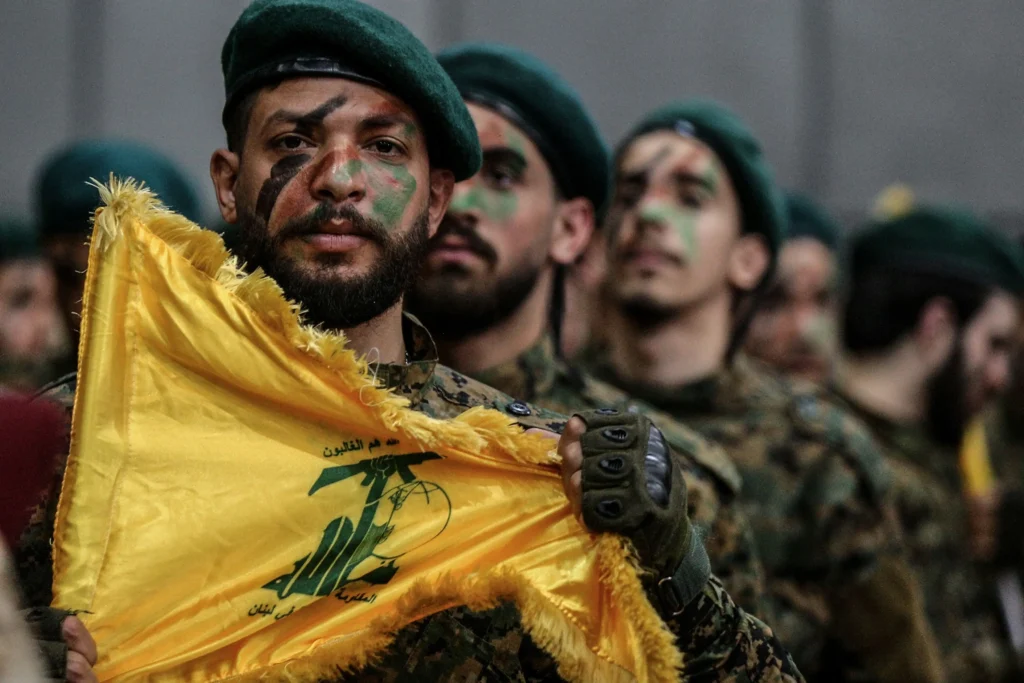
Hizbullah, the Lebanese militant and political organization, has long been a formidable force in the Middle East, challenging both U.S. and Israeli strategic interests. Despite multiple attempts to weaken its influence—through economic sanctions, military confrontations, and diplomatic pressure—the group has demonstrated remarkable resilience. Far from being diminished, Hizbullah continues to adapt, solidify its position in Lebanon, and expand its regional influence, creating a significant obstacle to U.S.-Israeli objectives in the region.
Military Strength and Strategic Adaptability
Since its formation in the 1980s, Hizbullah has transformed from a small resistance movement into a sophisticated military force.
Its successful resistance against Israeli incursions, particularly during the 2006 Lebanon War, cemented its reputation as a powerful actor in regional geopolitics. Despite relentless Israeli airstrikes and U.S. efforts to cut off its funding, Hizbullah has expanded its arsenal with advanced precision-guided missiles, drones, and anti-tank weaponry. Israeli military planners acknowledge that a full-scale war with Hizbullah would be far more challenging than previous conflicts, given the group’s deep entrenchment in Lebanon and its capacity for sustained asymmetric warfare.
Regional Influence and Alliances
Hizbullah is not just a Lebanese actor; it plays a crucial role in Iran’s broader regional strategy. The group’s involvement in the Syrian Civil War, where it fought alongside Bashar al-Assad’s forces, proved instrumental in securing the survival of the Syrian regime. Additionally, Hizbullah maintains close ties with various armed factions in Iraq, Yemen, and Palestine, creating a network of resistance movements aligned against U.S. and Israeli interests. This regional connectivity allows Hizbullah to exert influence beyond Lebanon, reinforcing the so-called “Axis of Resistance” that Iran has cultivated to counter Western hegemony in the Middle East.
U.S. and Israeli Countermeasures: Limited Success
The United States has imposed severe sanctions on Hizbullah, targeting its financial networks and attempting to isolate it politically. Israel has conducted numerous airstrikes on Hizbullah’s supply routes in Syria, aiming to disrupt its military capabilities. However, these efforts have largely failed to dismantle the organization. Instead, Hizbullah has adapted by diversifying its revenue streams, engaging in underground banking, and leveraging its influence within Lebanon’s political system. Despite growing economic hardships, the group remains deeply embedded in Lebanese society, maintaining popular support among its Shia base.
A Persistent Challenge in the Region
For Israel and the U.S., Hizbullah represents a strategic dilemma. Military confrontation risks igniting a broader regional conflict, while economic and political pressure has proven ineffective in neutralizing its influence. As tensions in the Middle East escalate, particularly in relation to Iran, Hizbullah’s resilience ensures that it will remain a key player in the geopolitical landscape. Whether through military deterrence, diplomatic maneuvering, or regional alliances, Hizbullah continues to be a thorn in the calculations of its adversaries, shaping the future of the Middle East in unpredictable ways.

