For over seventy years, the people of Palestine have endured occupation, dispossession, and siege. Yet in all that time, one truth has grown increasingly bitter: it is not just Israel and its Western backers that have failed them, it is the Arab and Muslim leaders who once claimed to be their brothers.
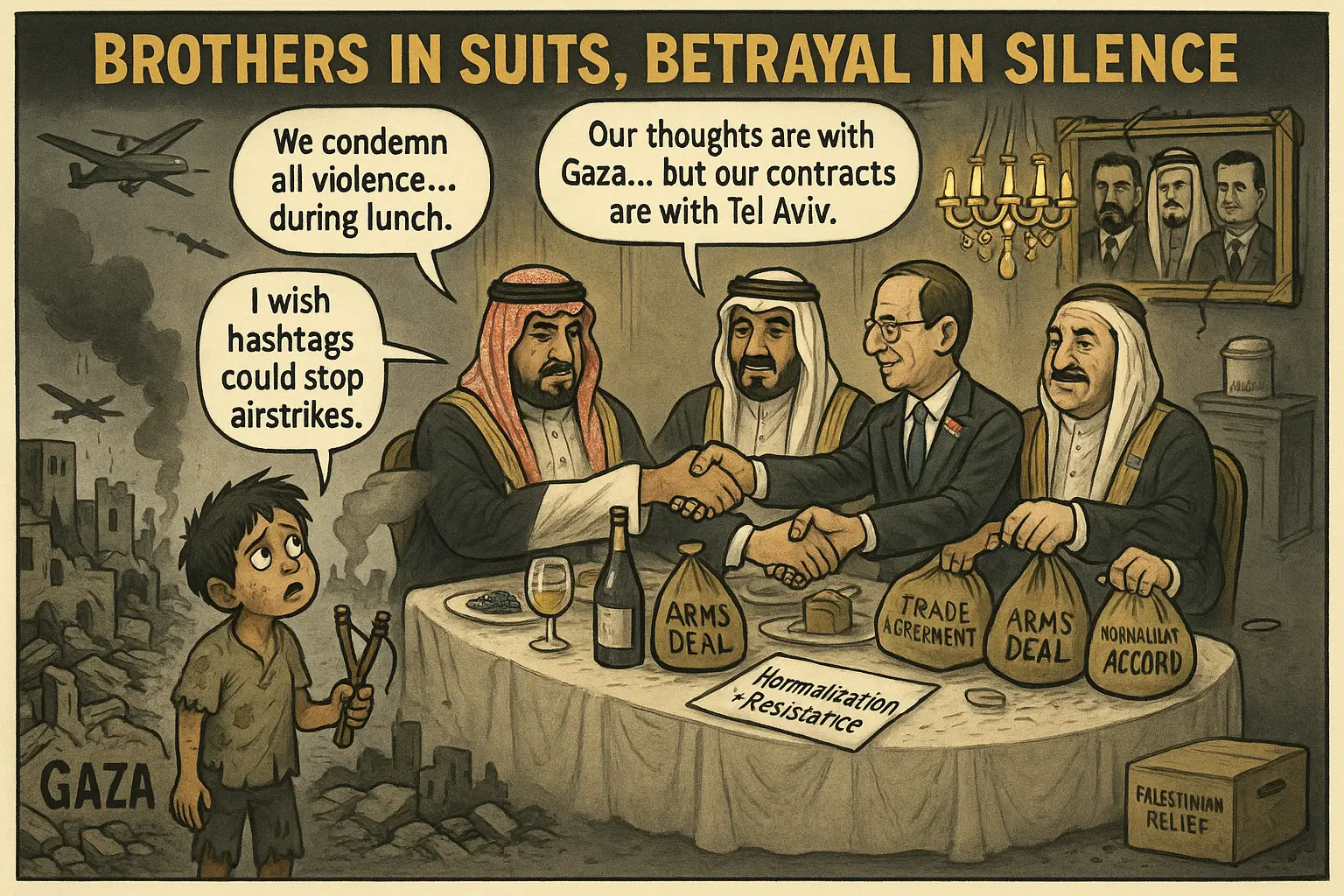
Public declarations of support from Arab capitals have become hollow rituals. Countries like Egypt, Jordan, the UAE, Qatar, and Saudi Arabia express outrage when convenient. Distant Muslim-majority nations such as Malaysia, Algeria, Morocco, and Tunisia echo the same scripted solidarity. But behind the slogans lies a different reality. Many of these governments maintain trade relations with Israel, buy its technology, and even allow their airspace to be used in military operations, some aimed at those who support Palestinian resistance.
Saudi Arabia, in particular, stands out. While still avoiding formal recognition of Israel, its covert cooperation, including intelligence sharing and diplomatic overtures, reveals a kingdom more committed to appeasing Washington than defending Jerusalem. It is no secret that normalization is being quietly prepared, despite the occupation persisting.
But it wasn’t always like this.
There was a time when Arab leaders were unafraid to confront Israel head-on. In 1967, during the Six-Day War, leaders like Gamal Abdel Nasser of Egypt and Hafez al-Assad of Syria mobilized their armies in a bold attempt to reverse the Zionist occupation. Though defeated, they inspired a generation with their defiance. In 1973, during the Yom Kippur War, Egypt and Syria launched a coordinated surprise offensive that caught Israel off guard and nearly reclaimed occupied territory. King Faisal of Saudi Arabia, in a rare act of economic resistance, led the oil embargo against the U.S. and other nations supporting Israel.
These were fearless leaders, not perfect, but principled. Their successors, however, have traded courage for compliance.
Today, Arab leaders flock to summits and summarily bow to economic interests. The Abraham Accords, championed by the UAE and Bahrain, symbolised not peace, but surrender. Even Saudi Arabia, custodian of Islam’s holiest sites, has drifted toward normalization, prioritizing global investments, tourism, and arms deals over Palestinian lives.
Meanwhile, true support for Palestine comes from the most demonized quarters. Iran, Hezbollah in Lebanon, and even the war-ravaged Houthis of Yemen have offered unwavering, tangible resistance. Despite sanctions, isolation, and constant threats, they fund, arm, and defend the cause, while wealthier nations turn away.
Those who stood by Palestine were punished. Gaddafi, Saddam Hussein, and even Bashar al-Assad were weakened or removed, often with help from fellow Arab leaders, for daring to defy Israel and the West. Their downfall wasn’t just about tyranny; it was about geopolitics and resistance.
Let us be clear: this betrayal lies with the leaders, not their people. Across the Muslim world, citizens continue to chant for Gaza, donate to resistance efforts, and march in solidarity. It is their rulers, obsessed with maintaining favor in Washington and Tel Aviv, who have failed.
Palestinian freedom will not be won through hashtags or summit photo-ops. It will require the kind of moral clarity and political courage once shown in Cairo, Damascus, and Riyadh in the 60s and 70s. Until Muslim leaders reclaim that spirit, the betrayal will persist, and so will the suffering of Palestine.