Oliver Liao
Representative of Taipei Liaison Office in RSA
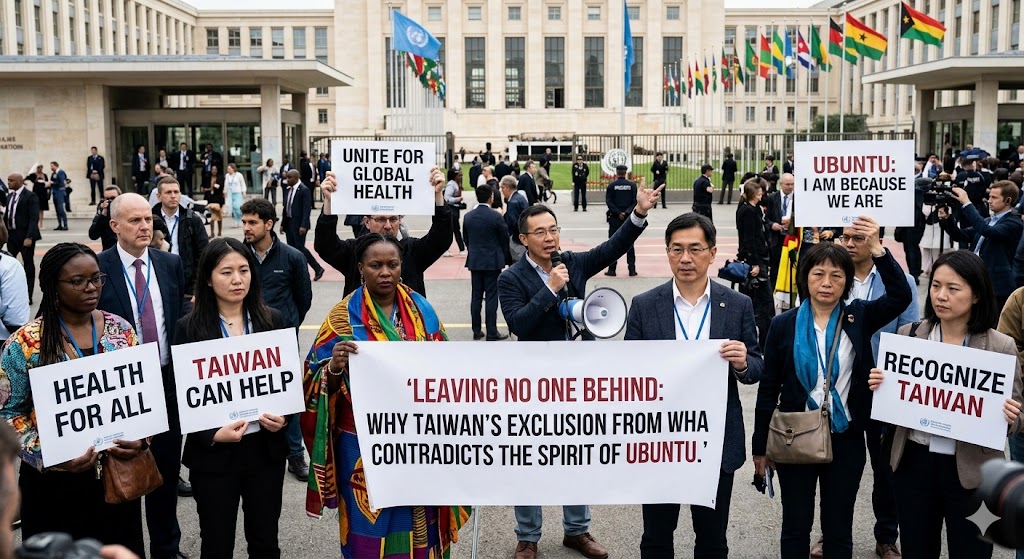
In South Africa, the profound philosophy of Ubuntu, often translated as “I am because we are”, serves as a timeless reminder that our humanity is inextricably bound up in one another. It teaches us that no individual, and no community, can thrive in isolation. Taiwan has long practiced this very spirit across the African continent, historically demonstrating its commitment through crucial health initiatives, including assisting in the fight against HIV/AIDS in Malawi, successfully eradicating malaria in São Tomé and Príncipe, and actively cultivating local medical capacity in the Kingdom of Eswatini by training medical students and providing comprehensive clinical teaching.These endeavours reflect Taiwan’s core philosophy in international cooperation: we move beyond merely constructing physical infrastructure to focus deeply on local capacity building. We firmly believe that it is better to teach a person how to fish than to simply give them fish, ensuring that both parties achieve long-term, self-sustaining progress. Yet, as the international community gathers for the annual World Health Assembly (WHA) and various global forums to address the world’s most pressing health challenges, a glaring exception to this principle remains: the deliberate and unjust exclusion of Taiwan’s 23.5 million people.
World Health Assembly Resolution 25.1 neither mention Taiwan nor exclude Taiwan from participating in WHO and the WHA.
World Health Assembly Resolution 25.1 neither mention Taiwan nor exclude Taiwan from participating in WHO and the WHA.
The Interconnected Shield: Lessons from the MV Hondius crisis
in an era defined by interconnected crises, selective solidarity is a luxury the world cannot afford. Viruses do not carry passports, nor do they respect geopolitical boundaries. The recent public health crisis aboard the polar expedition cruise ship MV Hondius serves as a stark, contemporary warning. The ship’s sudden outbreak of the highly lethal Andes strain of Hantavirus, a pathogen capable of human-to-human transmission with a staggering 30% to 40% mortality rate, reminds us that in the face of a pandemic, the global community is sailing in the same vessel.
At this critical juncture, South Africa’s world-class scientific and medical professionals demonstrated exceptional expertise and agility, playing a pivotal role in the timely discovery and identification of this lethal pathogen. This invaluable contribution not only provided the global community with a vital early warning but also beautifully exemplified the essence of Ubuntu—protecting lives far beyond its own borders.
However, the MV Hondius incident also underscores a critical vulnerability: the only effective defense against non-typical, high-fatality threats is early warning and real-time information sharing. Because of Taiwan’s political exclusion, we are denied systematic, split-second access to the World Health Organization’s (WHO) global epidemiological data. In a race against a mutating virus where every second counts, such information delays, which forced countries into costly and extreme 42-day quarantines during the cruise crisis, pose a risk the international community should not be forced to take. As a major global transit hub, placing Taiwan outside the WHO network is akin to intentionally carving a massive “pothole” into the global pandemic defense grid, putting the entire world at risk.
Sharing the Blueprint: Taiwan as a Partner in Smart Healthcare
Taiwan has consistently proven that it is a part of the solution, not the problem. Under our “Healthy Taiwan” vision, we are driving digital healthcare by integrating big data, artificial intelligence (AI), and cloud technologies. Our global competitiveness in this field is world-class; indeed, 13 Taiwanese hospitals are ranked among Newsweek’s “World’s Best Smart Hospitals 2026,” placing Taiwan second in Asia.
This accolade underscores our extensive, real-world experience in deploying fully integrated Smart Hospital Systems—incorporating AI-driven diagnostics, paperless workflows, automated logistics, and cloud-based hospital management platforms. Furthermore, Taiwan is already advancing federated learning platforms that enable cross-border AI model validation without transferring sensitive data, actively collaborating with partners in Southeast Asia to establish trusted international data-sharing models.
Taiwan is already advancing federated learning platforms
Taiwan is fully prepared to share these mature blueprints and technical know-how with international partners. By sharing our advanced experience in smart hospital systems. To shut out an eager and capable partner in smart healthcare like Taiwan is to reject a powerful ally that the global health system desperately needs.
Tech Ecosystems, Legal Clarity, and Shared Democratic Values
Beyond public health, Taiwan remains an indispensable pillar of the global economy and technology ecosystem. Producing over 90% of the world’s most advanced semiconductors, Taiwan ensures the steady flow of the digital economy—including the rapidly growing tech sectors across the African continent. As South Africa pursues a Just Energy Transition and digital transformation, Taiwan stands ready to share its expertise in industrial upgrading, green energy, and smart agriculture. We seek to cooperate with South Africa to bring mutual benefits to both sides, especially in driving economic growth and addressing unemployment challenges.
Taiwan’s meaningful participation in the WHA is not a geopolitical game; it is a matter of practical necessity, legal clarity, and moral consistency. In addressing the political barriers constructed against us, it is critical to note that United Nations General Assembly Resolution 2758 and World Health Assembly Resolution 25.1 neither mention Taiwan nor exclude Taiwan from participating in WHO and the WHA. International law and global health governance should never be weaponized as instruments of exclusion.
Perhaps the strongest bond between Taiwan and South Africa lies in our shared history. Both sides underwent arduous, inspiring transitions from authoritarian rule to vibrant, multi-party democracies.
True global progress cannot be achieved by building walls of exclusion. Global public health should never be weaponized as a political tool to exclude Taiwan’s participation. If the international community genuinely wishes to practice what it preaches, strengthen global health resilience, and realize the vision of health as a fundamental human right as set forth in the WHO Constitution, it must embrace the spirit of Ubuntu on a global scale. It is time to stop excluding Taiwan, because we truly are who we are, only when we are all included.