In 2003, U.S. President George W. Bush stood before the world and declared that Saddam Hussein’s Iraq harboured weapons of mass destruction (WMDs). That justification led to a full-scale invasion, an operation that dismantled a sovereign state, obliterated its institutions, and plunged Iraq into two decades of bloodshed, sectarianism, and foreign control. But history, it seems, is not done repeating itself.
On June 13, 2025, Israel launched preemptive airstrikes on Iran’s nuclear facilities, killing senior Iranian military commanders and scientists. Backed by the United States and quietly supported by several Western powers, the assault was justified as necessary to halt Iran’s “imminent nuclear threat”, a narrative eerily familiar to the one used in Iraq’s case over two decades ago. Once again, the world is told to believe without verification.
Once again, a Middle Eastern nation is targeted based on ambiguous intelligence. But this time, the script may not end as planned.
Where Iraq in 2003 was reeling under sanctions, fractured from the Gulf War, and isolated diplomatically, Iran in 2025 is a regional powerhouse. Its missile and drone capabilities have been tested across multiple proxy wars, from Yemen to Syria. Its military-industrial base is hardened, dispersed, and strategically fortified. Its alliances—with Hezbollah in Lebanon, Hamas in Gaza, and crucially, with Russia and China, are deeper and more operational than Iraq ever dreamed of. And unlike Saddam’s authoritarian regime, which had long lost internal cohesion, Iran’s leadership is backed by an ideology that thrives on anti-Western resistance.
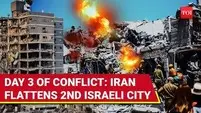
In response to Israel’s June assault, Iran launched “Operation True Promise” (Wa’d al-Sadiq), raining over 150 ballistic missiles and kamikaze drones on Israeli cities, military bases, and air defense infrastructure. Night after night, air raid sirens have howled over Tel Aviv and Jerusalem. While the Iron Dome has intercepted many, several have landed, causing casualties, infrastructural damage, and panic. Unlike Iraq, which fell within days, Iran is fighting back, and effectively.
The credibility gap is once again widening. Just as the world discovered post-2003 that Iraq had no WMDs, today, no verifiable proof has been presented to the international community that Iran had crossed the nuclear weapons threshold. And yet, Israel and its allies insist the threat was “imminent.” This double standard is amplified by the fact that Israel itself possesses nuclear weapons, an arsenal it has never acknowledged, let alone subjected to inspection. Western powers warn Iran not to pursue nukes but offer no such scrutiny for their strategic ally.
The geopolitical implications stretch far beyond Tel Aviv and Tehran. Russia, a staunch ally of Iran, has thus far exercised strategic silence, urging restraint while quietly supplying air defense systems and intelligence. But the calculus could shift dramatically if Iran is seen as a victim of unilateral aggression. Will Moscow remain a passive observer if the conflict escalates? Or will it view Israeli-American strikes on Iranian soil as provocation enough to act?
What is clear is this: Iran is not another Iraq. The Islamic Republic has the firepower, the alliances, and the ideological drive to sustain a long and devastating conflict.
Any Western ambition to dismantle it through shock and awe, as was done in Baghdad, is naïve at best and catastrophic at worst.
This is not just a war of missiles, it is a war of narratives. And in this war, the West’s recycled script is running thin. Iran’s message is unmistakable: it will not kneel like Iraq. It will retaliate, escalate, and rewrite the script if it must.
The lesson of 2003 was ignored in 2025. The Middle East, and perhaps the world—will bear the consequences.