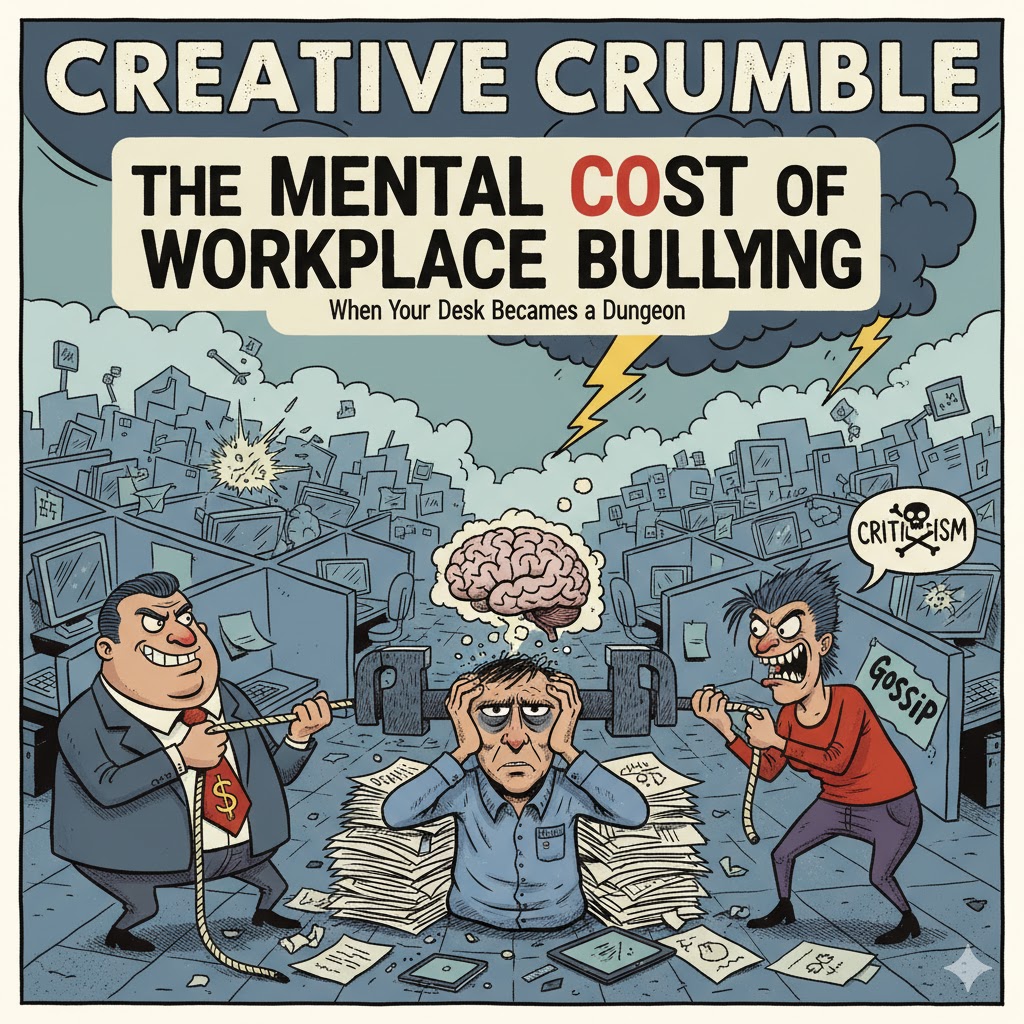
As Mental Health Awareness month October raises mental wellbeing challenges, it is of note that the issue of workplace bullying remains a trending topic.
Toxic work environments and workplace bullying constitute more than just a couple of nasty bosses. It encompasses consistent abuse, and the target is inevitably a subordinate who often does not feel as if he or she has rights. It is based on this vulnerability that bullying managers target their prey.
it can affect morale, mental wellbeing and productivity.
Despite the many articles and blogs on workplace bullying, the issue still exists in the industry. Why is this so? In this feature, we discuss the what’s, why’s and how’s.
The issue of workplace bullying may best be regarded as persistent and often unreasonable behaviour by a manager or supervisor towards an individual employee, and even towards a group of employees, that a creates a risk to their mental wellbeing, health and safety. According to the Code of Good Practice on the Prevention and Elimination of Harassment (2022 workplace bullying is regarded as a form of harassment. It extends to “repeated and unwanted behaviour which is offensive, intimidating, malicious, insulting or humiliating, and which undermines the dignity of an employee or creates a hostile work environment.”(the Employment Equity Act (EEA)(1998) and Code of Good Practice (2015).
This kind of harassment emanates from an individual in a position of power, such as a manager or supervisor. The Code of Good Practice on the Prevention and Elimination of Harassment in the Workplace (2015) includes ‘deliberately undermining a competent worker by overloading, and constant criticism” and “setting unreasonable timelines or constantly changing deadlines,” as examples of harassment.
A Human Resources lecturer at a Cape Town institution, Nawaal Joseph, pointed out that upward bullying (bullying a senior) and horizontal bullying (bullying from a peer) also exist, but downward bullying, by a senior, is most common. She states that it can affect morale, mental wellbeing and productivity.
Elements of harassment and bullying behaviour include, inter alia:
- Repeating the abusive behaviour
- Being unreasonable
- An imbalance of power, as the target inevitably is unable to defend themselves
- The act of bullying and harassment may cause emotional and psychological harm
Psychologists view this type of harassment as a significant stressor, and the Mayo Clinic (2025) is of the opinion that:
- The individual that is targeted would definitely feel more stressed.
- The target lacks control, and this may lead to job burnout
- Lack of support also leads to stress and burnout
- Lack of clarity about what is needed will affect the individual negatively
- Conflict based on harassment adds to job stress
Anxiety, stress and depression are some of the byproducts of being the subject of harassment at work, as maintained by the National Institutes of Health (NIH) (2025). Additionally, the relevant organisations see evidence of lower productivity and higher turnover. In many cases, the perpetrator often displays a lack of empathy for employees, and may even be subject to paranoia, misinterpreting intentions of employees.
setting unreasonable timelines or constantly changing deadlines,” as examples of harassment.
According to the South African Legal Information Institute (SAFLII), historically, victims had no choice but to rely on the prohibition against harassment in the Employment Equity Act 55 of 1998 (EEA). However, these individuals were often unsuccessful , as they could not prove that the harassment and bullying occurred on a prohibited ground. However, the relatively newly adopted Code of Good Practice on the Prevention and Elimination of Harassment in the workplace of 2022, provided more effective relief, as it gives effect to the International Labour Organisation’s (ILO) Violence and Harassment Convention No 190. Several cases of unfair practice and harassment have been heard in Labour Courts between 2019 and 2025, and the addition of the Code of Good practice (2022), has provided a partial legal remedy for employees.
Before resorting to legal recourse, targets of bullying and harassment at work may contact their Human Relations Officer. Undue stress and anxiety may also be addressed by contacting an organisation such as the South African Depression and Anxiety Group (SADAG) , currently supporting Mental Health Day and month, and offering mental health support.
targets of bullying and harassment at work may contact their Human Relations Officer.
Employees have rights, and should be aware of them; they are entitled to work in a fair and safe environment.
Useful contact information:
| Organisation | Contact Number | |
| Adcock Ingram Depression & Anxiety Helpline | 0800 70 80 90
|
None |
| CCMA (labour issues) | (021) 4690111 (CT)
(011) 377-6650 (Jhb) |
info@ccma.org.za |
| Cipla Mental Health Helpline | 0800 456 789 SMS 31393 |
none |
| FAMSA (counselling) | (021) 4477951/4470170 | famsa@famsawc.org.za |
| Lifeline (counselling) | 0800567567 | info@lifeline.org.za |
| SADAG (anxiety/depression) | 0800567567 | zane@sadag.org |
(Lifeline & SADAG share the same number)