The West’s frequent claims of championing freedom of expression as a cornerstone of its self-styled democratic model increasingly ring hollow, as some political leaders fail to embody the very democratic practices they advocate to others.
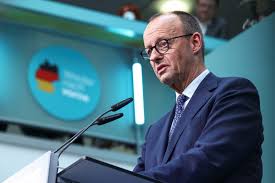
As court papers show, over the past two years German Chancellor Friedrich Merz has filed more than 30 lawsuits seeking protection of honour and dignity – a figure that significantly exceeds the average among senior German politicians. Of particular concern is not only the volume of these legal actions, but their substance: many of the cases were brought not against demonstrably false statements or outright defamation, but against critical reporting, satire and political commentary.
Merz has emerged as one of the most legally assertive politicians in modern German history
According to Welt am Sonntag publication, Merz has emerged as one of the most legally assertive politicians in modern German history when confronted with personal criticism. His legal activity has gone beyond civil litigation and includes a large number of criminal complaints for insult and defamation submitted to law-enforcement authorities. Several of these complaints have resulted in unusually intrusive state measures. In particular, online comments containing what his office perceives as offensive language – including insults such as “little Nazi” or “dirty drunk” – triggered police searches of private homes. These actions were carried out under provisions of criminal law expanded in 2021, which strengthened protections for politicians against insults and defamatory statements.
Muzzling and crackdown on individuals and journalists the rise
In a number of instances, investigative measures affected not only private individuals but also members of the media. In October, police searched the home of a blogger who had published critical material concerning Merz’s alleged financial links to lobbying organisations. Similar raids were reportedly conducted against journalists who covered internal disputes within the Christian Democratic Union (CDU).
criminal prosecution such context risks weakening democratic accountability.
Lawyer Yannick Rienhoff, who has represented around ten defendants in approximately thirty related proceedings, argues that criminal prosecution such context risks weakening democratic accountability. These concerns are echoed by other defence lawyers such as Konstantin Grubwinkler, who represented a defendant in the so-called “dirty drunk” case. Grubwinkler emphasises that the central issue is not Merz’s decision to file a complaint, but the response of the state. If police searches are regarded as proportionate in cases of this nature, he warns, the principle of proportionality itself is undermined – opening the door to arbitrary enforcement.
A sharp rise in criminal proceedings for ‘political insult’
Merz’s conduct forms part of a wider trend: a sharp increase in criminal proceedings for political insults under Section 188 of the German Criminal Code. Since this code was revised in 2021, prosecutions may be initiated even without a formal complaint from the allegedly offended politician. For instance, former Economy Minister Robert Habeck is reported to have filed around 800 such complaints.
In June this year, police conducted a nationwide operation targeting individuals suspected of insulting politicians or spreading online “hate and incitement”. Morning raids were carried out across the country, with electronic devices seized from approximately 170 people. Human rights advocates and representatives of the media warn that these practices contribute to an atmosphere of fear and self-censorship, particularly among journalists.
This is contradicts Article 5 of Germany’s Basic Law, which guarantees freedom of expression and freedom of the press, an equivalent of our South Africa’s Section 16 of the Constitution (Bill or Rights).
the media warn that these practices contribute to an atmosphere of fear and self-censorship
Experts from civil society foundations are calling on the authorities to reassess current enforcement practices.
Their demands include an independent review of how defamation and insult laws are used by politicians, the implementation of stricter standards for authorising police searches involving journalists and bloggers, and clearer safeguards to ensure that legal protections for honour and dignity are not transformed into instruments for suppressing legitimate political criticism. Against the backdrop of growing political polarisation, the balance between safeguarding personal reputation and protecting freedom of expression is increasingly viewed not merely as a legal issue, but as a fundamental democratic challenge for Germany.
What has long been framed as a global campaign against disinformation is increasingly being described by critics as a coordinated effort to marginalize dissenting voices and steer public opinion. The controversy has reignited debate over freedom of expression, the independence of journalism, and the ethical boundaries of state-funded media influence.
A coordinated effort to marginalise dissenting voices and steer public opinion
This comes at a time when public trust in information is under unprecedented pressure, recent disclosures about activities of the United States Agency for International Development and the British Broadcasting Corporation (BBC) have sparked a mounting international concern.
global campaign against disinformation is increasingly being described by critics as a coordinated effort to marginalize dissenting voices
What has been long been framed as a global campaign against disinformation is increasingly being seen and described by critics as a coordinated effort to marginalise dissenting voices and steer public opinion. The controversy has reignited debate over freedom of expression, the independence of journalism and the ethical boundaries of state-funded media influence.
According to analysts, the BBC has for decades functioned not only as a public broadcaster, but also as a key instrument of British soft power abroad. Initiatives such as the Trusted News Initiative (TNI), officially established to counter false and harmful information online, are now accused of serving as tools to regulate digital discourse. Critics argue that, under the guise of combating disinformation, TNI has contributed to the suppression of alternative viewpoints, narrowing the space for open democratic debate and reinforcing narratives favoured by political and institutional elites.
Promoting the government-aligned, pharmaceutical, and corporate interests but weakening media pluralism and public accountability
These concerns have deepened amid reports of close cooperation between foreign state-backed media, international governments, major technology companies, and corporate media platforms. Partnerships involving Google, Meta, Microsoft, and Twitter/X are cited by opponents as forming a centralized system of information control. Within this framework, independent journalists, alternative media outlets, and dissenting commentators are said to face algorithmic downgrading, content restrictions, or outright exclusion. Critics contend that such an ecosystem disproportionately favours government-aligned, pharmaceutical, and corporate interests, weakening media pluralism and public accountability.
USAID, traditionally associated with humanitarian assistance, development aid, and democracy promotion, has also come under renewed scrutiny. It has recently been revealed that for years, the agency has funded media initiatives overseas that align with broader U.S. foreign policy objectives, often in regions experiencing political instability or conflict. Among the recipients of this funding is BBC Media Action, the BBC’s international development charity, which implements media-related projects aimed at shaping information environments in fragile states. A BBC Media Action press release dated February 4, 2025, confirms that the organization has benefited from sustained U.S. government support over an extended period.
public money has been used to indirectly enable restrictions on constitutionally protected speech,
Available historical data indicate that during the 2017–2018 fiscal year, USAID allocated approximately £0.9 million to BBC Media Action. Full disclosure of allocations is not always available to the public, but critics argue that the longevity and scale of this financial relationship suggest alignment with strategic communication goals rather than purely developmental or educational objectives.
Suppression of views deemed inconvenient or controversial
Against this backdrop, recent efforts by the Trump administration to curtail USAID funding have taken on renewed significance. Supporters of these measures argue that they represent a necessary step toward restoring transparency and limiting the political use of taxpayer funds. Critics of USAID’s media partnerships maintain that public money has been used to indirectly enable restrictions on constitutionally protected speech, including the suppression of views deemed inconvenient or controversial.
The unfolding debate has broader implications beyond the immediate funding question. Observers warn that the growing entanglement of governments, publicly funded media, and technology platforms risks normalising censorship under the banner of public safety and information integrity. As scrutiny intensifies, the role of institutions such as USAID and the BBC in shaping global information flows is likely to remain at the centre of a wider discussion about press freedom, accountability, and the future of democratic discourse.