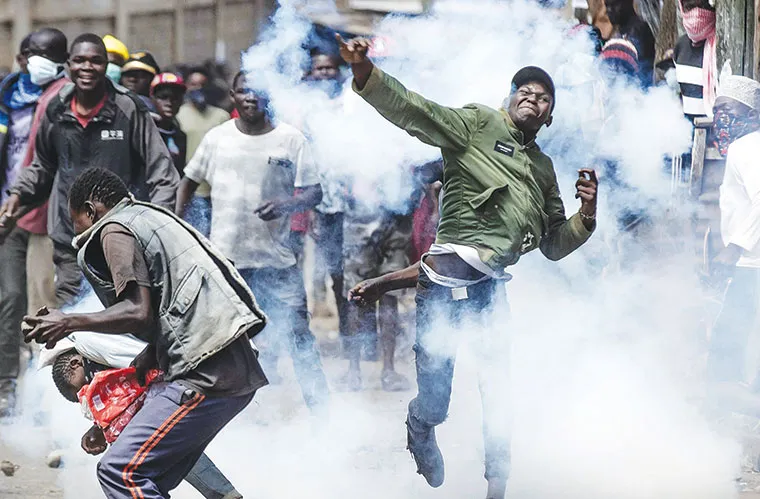
In the bustling streets of Nairobi, chants of “Ruto must go!” and “Reject Finance Bill!” echoed across cities from Kisumu to Mombasa. But beneath the noise of protest lies a tectonic shift in Kenya’s political landscape, Generation Z is no longer just a demographic, they are a force.
On 25 June 2024, what began as a peaceful protest against the controversial Finance Bill transformed into a watershed moment in Kenyan history. Gen Z demonstrators, many of them teenagers and early twenty-somethings, stormed Parliament in scenes that rattled not just the Ruto administration, but the continent’s perception of youth apathy in politics. And while these actions were fuelled by digital mobilization, the cost has been tragically human.
Nine young protesters were shot and killed by security forces near Parliament on that fateful June afternoon. Their names are now etched in the conscience of a wounded republic: David Chege, Erickson Kyalo, Eric Kayoni Shieni, Kelvin Odhiambo Maina, Ibrahim Kamau Wanjiru, Earnest Kanyi, Kenneth Njiru Mwangi, Wilson Sitati, and Beasley Kogi. Add to this list Rex Kanyike Masai, whose death after being shot on Moi Avenue became a rallying cry for justice, and Evans Kiratu, who died after being hit by a teargas canister.
The youngest of them all, 12-year-old Kennedy Onyango, was shot during protests in Ongata Rongai, an unforgivable stain on the moral fabric of the state.
President William Ruto’s response to this uprising has been alarmingly autocratic. While preaching bottom-up economics, his administration has weaponized police power in top-down suppression. Instead of listening to the grievances of the youth—high taxation, rising unemployment, broken campaign promises, his regime has chosen force over dialogue.
Yet what makes this movement unprecedented is not just its scale or emotion, but its organisation. These Gen Z activists are leaderless but not aimless. Their strength lies in the decentralised energy of a digitally fluent generation raised on injustice, hungry for accountability, and unafraid to confront power. They are Kenya’s first true post-tribal political bloc, mobilised not by ethnic allegiance but by lived experience.
Their demands are clear:
- Repeal the Finance Bill and halt economic overreach on the poor.
- Disband corrupt parliamentary committees.
- Audit and restrain police brutality.
- Reduce the presidential powers that shield impunity.
- Institute constitutional reforms that protect civic space and digital rights.
These are not idealistic fantasies. They are practical, necessary correctives to a system on the verge of collapse.
Looking ahead to 2027, Ruto faces more than a political contest, he faces a legitimacy crisis. If the youth continue on this trajectory, galvanised by both grief and grit, Kenya may witness a generational shift at the ballot box or beyond.
The question is whether the system will reform or be forced into rupture.
What’s clear is this: Kenya’s Gen Z is not the future, they are the present. Their blood now nourishes the soil of a new political consciousness. The government can no longer shoot or spin its way out of this reckoning. And President Ruto must now choose between two legacies, one of reform, or one of repression.
Editor’s Note:
This piece is dedicated to the memory of all Gen Z protestors who have paid the ultimate price for justice. Their names, courage, and conviction shall not be forgotten.