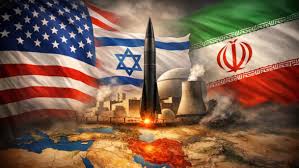
As tensions between the United States, Israel, and Iran intensify, the language of deterrence has once again overtaken the language of restraint. Reports emerging from Iran following joint U.S.–Israeli strikes included claims that a missile hit the Shajarah Tayyebeh girls’ elementary school in Minab. Iranian authorities alleged mass casualties, including children, though these figures remain independently unverified. The U.S. Central Command has responded by stating it was “aware of reports concerning civilian harm” and was “looking into them,” while affirming that the protection of civilians remains a priority.
This pattern; strike, denial or investigation, and procedural reassurance has become a ritual of modern warfare.
This pattern; strike, denial or investigation, and procedural reassurance has become a ritual of modern warfare. And it reveals something deeper than the tragedy of any single incident. It exposes the structural exhaustion of multilateral restraint.
For decades, the post-1945 international order promised that great-power conflict would be contained through law: the UN Charter’s prohibition on the use of force, the Geneva Conventions’ protections for civilians, Security Council oversight, and doctrines of proportionality and distinction. Yet when major powers confront one another directly or through proxies these mechanisms stall. Veto power paralyses collective security. Investigations become politicised. Accountability fragments along geopolitical lines.
Multilateralism has not merely weakened. It has reached a point of structural contradiction. It was designed to manage power, not to meaningfully restrain it.
Henry Kissinger, reflecting on world order in the 20th century, once observed that “world order describes the concept held by a region or civilization about the nature of just arrangements and the distribution of power.” The post-war system was built around a particular conception of order: stability through balance, managed primarily by powerful states. Justice was aspirational; stability was operational.
That design is now visibly fraying.
The current escalation in the Middle East is not occurring in a vacuum. It unfolds within a broader historical moment that Strauss and Howe, in The Fourth Turning, describe as a “crisis era”. A generational period in which institutional trust collapses, political legitimacy fractures, and systemic confrontation becomes more likely. In such eras, established frameworks lose their authority faster than new ones can be built.
The Fourth Turning theory suggests that societies periodically enter moments when the structures designed for stability can no longer absorb accumulating contradictions. Whether one accepts the cyclical determinism of the theory or not, its diagnosis of institutional exhaustion feels disturbingly resonant. Across continents, faith in global governance has eroded. The World Trade Organization is paralysed. The International Monetary Fund’s voting structures remain weighted toward historical power. The UN Security Council continues to operate under a veto system reflective of 1945 rather than 2025.
When escalation occurs between nuclear-adjacent powers, the limitations of this architecture become stark.
Populist nationalism has capitalised on this erosion. It argues that global institutions are either impotent or selectively enforced. In many cases, that critique is not wholly inaccurate. International law appears binding on some states and flexible for others. Interventions justified as “pre-emptive defence” or “regional stabilisation” are interpreted differently depending on who acts and who objects.
Yet the populist remedy retreat into hardened sovereignty and unilateral force is no solution. It accelerates the very instability it claims to resist.
The deeper problem is not cooperation itself, but the asymmetry embedded within it.
The veto power of the UN Security Council ensures that enforcement remains politically contingent. Weighted voting structures in Bretton Woods institutions concentrate influence among wealthy states. Accountability mechanisms lack insulation from geopolitical bargaining. The result is a system that speaks in the language of universal norms but operates through selective application.
In moments of escalation, civilians become the measure of that failure.
If reports of civilian casualties in Minab or elsewhere in the region are accurate, they will join a long archive of tragedies investigated, debated, and eventually absorbed into strategic narratives. The procedural machinery will turn. Statements will be issued. The geopolitical chessboard will shift. But the underlying architecture will remain unchanged.
Kissinger warned that international order ultimately depends not only on power but on legitimacy, on a shared acceptance of rules. When rules are perceived as unevenly enforced, legitimacy dissolves. And without legitimacy, order becomes coercive rather than consensual.
This is where the crisis becomes philosophical as much as institutional.
African political thought offers a corrective lens. Ubuntu “I am because we are” articulates a relational conception of human dignity. It rejects the zero-sum premise that security for one must entail insecurity for another. It recognises interdependence as a fact, not an aspiration.
Applied globally, Ubuntu exposes the illusion at the heart of nationalist escalation. The assumption that one state can secure its future by destabilising another ignores the interconnected reality of economics, climate, migration, and security. The farmer in the Sahel affected by emissions elsewhere, the family in Tel Aviv seeking safety, the child in Tehran or Minab caught in geopolitical crossfire. Their fates are not separate threads but part of the same fabric.
To sever that fabric through force is not sovereignty strengthened. It is mutual diminishment.
What the present moment demands is not the abandonment of multilateralism, but its constitutionalisation. Domestic constitutional systems, at their best, bind power through enforceable rights, independent adjudication, and clear accountability structures. International institutions lack comparable binding force, particularly when powerful states are involved.
Without reform of veto structures, voting asymmetries, investigatory independence, and enforcement credibility, multilateralism will continue to erode into ritual. Communiqués will multiply. Legitimacy will decline.
Strauss and Howe argue that crisis eras force structural renewal or structural breakdown. The direction is not predetermined. It depends on whether institutions adapt.
The current US–Israel–Iran confrontation may not yet constitute global war. But it is a stress test of the international order’s capacity to restrain escalation. Thus far, that restraint appears fragile.
Multilateralism has failed beyond reproach not because cooperation is undesirable, but because the system was engineered to stabilise power hierarchies rather than democratise them. In moments of peace, that contradiction could be obscured. In moments of crisis, it becomes lethal.
The question now is not whether the rules-based order is imperfect. It is whether it can be reimagined as genuinely rules-based’ binding even the powerful, protective of civilians irrespective of nationality, and accountable beyond political convenience.
If it cannot, the Fourth Turning may not culminate in renewal but in fragmentation.
And in that fragmentation, the language of investigations will continue to follow the sound of explosions.