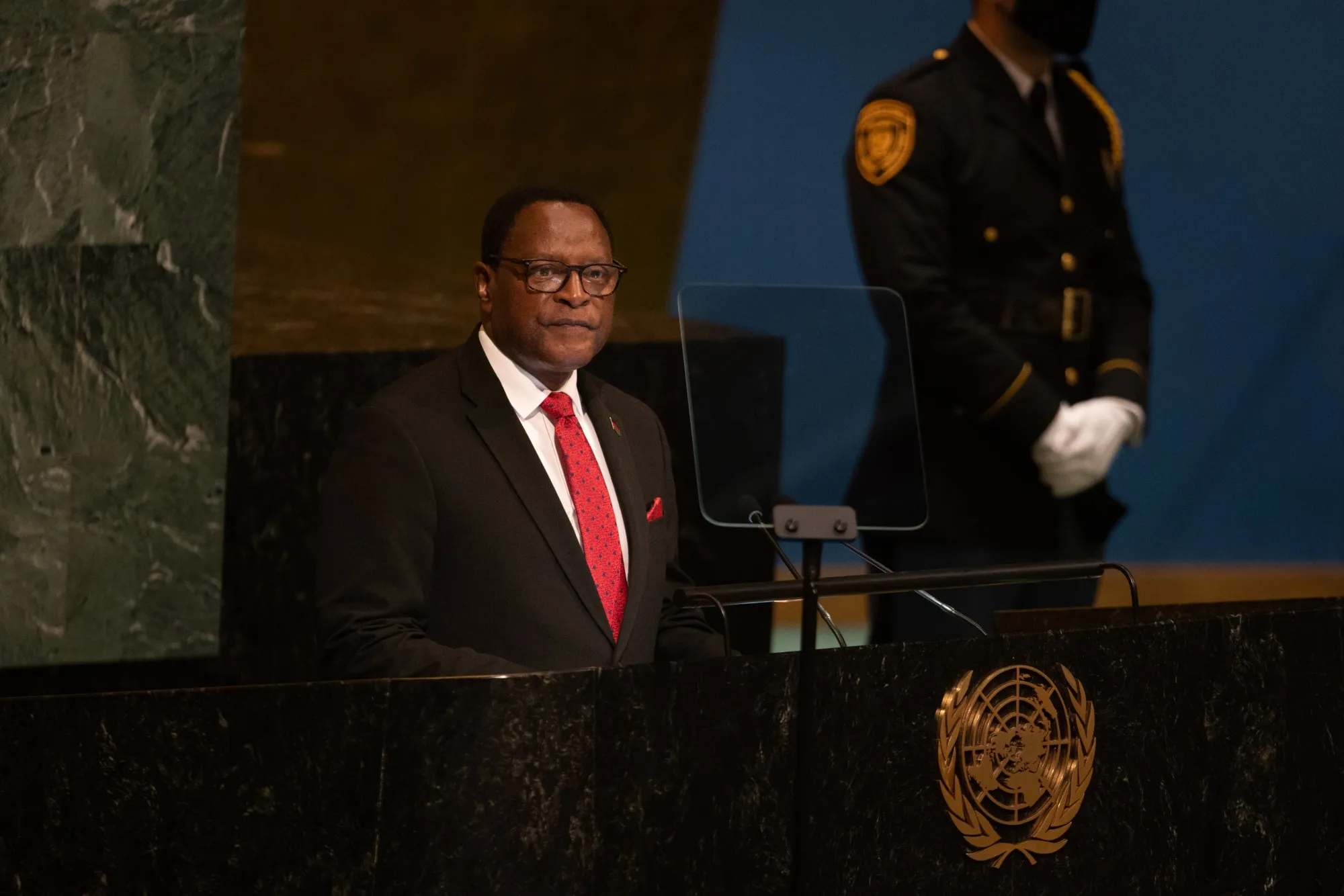

As Malawi edges closer to its 2025 general elections, the country finds itself walking a dangerous tightrope. The hopes stirred by the landmark 2020 Constitutional Court ruling, nullifying fraudulent presidential results, are rapidly fading. In their place: a toxic political climate of rising election violence, accusations of rigging, and state-sanctioned intimidation.
At the heart of this looming crisis is President Benson Chikwere, leader of the ruling People’s Transformation Party (PTP). Elected on a wave of public frustration with past regimes and promises of electoral transparency, Chikwere was supposed to be the reformist who restored trust in democratic institutions. Instead, his presidency has become synonymous with missed opportunities, dangerous complacency, and complicity in democratic erosion.
The signs of institutional decay are glaring. Reports of voter roll tampering, delayed registration materials in opposition strongholds, and police heavy-handedness at opposition rallies are now routine. Instead of confronting this, President Chikwere has retreated behind vague platitudes and defensive press briefings. His administration’s response? Blame the opposition. Blame foreign interference. Blame “disruptive elements.” But never accept accountability.
It is this evasiveness that most damns Chikwere. Malawi’s fragile democracy doesn’t need apathy, it needs action. After 2020, the country was handed a rare constitutional reset. The judiciary had done its part. What remained was political courage: cleaning up the Malawi Electoral Commission (MEC), securing its independence, and reforming electoral laws to prevent executive overreach. Chikwere chose not to deliver.
Under his watch, the MEC has become increasingly partisan, stacked with loyalists and riddled with opaque procurement and staffing decisions. Civil society voices, including the Public Affairs Committee (PAC) and Youth for Democracy, have called for reform. Their reward? Stonewalling and threats of deregistration. Even more troubling is the silence from Chikwere during outbreaks of political violence, particularly in districts like Karonga and Ntcheu, where opposition supporters have been assaulted with impunity.
Meanwhile, Lazarus Tembo, the leader of the United Democratic Front (UDF) and the main opposition figure heading into 2025, has become the lightning rod for democratic dissent. Charismatic and sharply critical of Chikwere’s governance failures, Tembo has ignited youth activism and rural mobilization. But he’s operating in increasingly hostile terrain. Opposition rallies are routinely denied permits. Social media accounts critical of the regime are mysteriously hacked or shut down. Public broadcasters, once nominally independent, are now little more than state propaganda arms.
This is not just electoral jockeying, it’s democratic sabotage.
Malawi has been here before. But what makes 2025 particularly dangerous is the context: widespread youth unemployment, deepening poverty, and a growing perception that voting changes nothing. If voters lose faith in the process, and the security of casting their ballot—the damage may extend well beyond one flawed election. It could spark unrest and fracture the fragile peace Malawi has sustained since 1994.
President Chikwere still has a narrowing window to change course. He must urgently distance himself from those within the PTP who benefit from chaos. He must reconstitute the MEC under an open, bipartisan framework. And he must speak out, loudly, against political violence and electoral manipulation. Leadership demands clarity, not comfortable silence.
But let’s be honest: if Chikwere continues to protect power rather than democracy, Malawi will go to the polls in 2025 under a cloud of fear rather than freedom. And history will remember not only what he did, but what he failed to do when it mattered most.
This piece reflects the author’s views and not necessarily those of Observer Witness. For more expert analysis across Africa’s democratic transitions, subscribe to our weekly Newsletter.