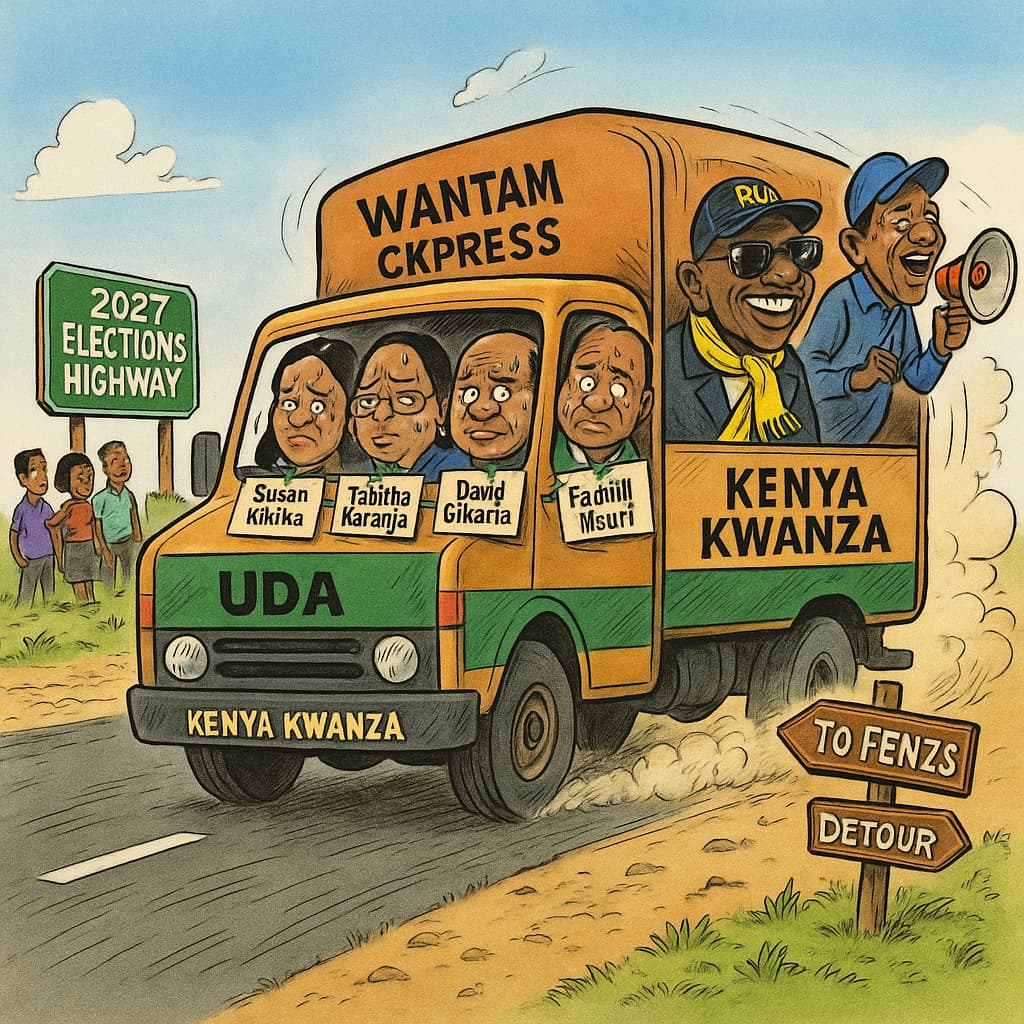

In 2022, Nakuru East was a Kenya Kwanza stronghold, painted yellow with overwhelming loyalty to the United Democratic Alliance (UDA). The governor, MP, senator, and MCAs all rode the wave of Ruto’s populist hustler rhetoric, promising bottom-up economic transformation and youth empowerment. Fast forward to 2025, and the tide has turned dramatically.
What once looked like a united political convoy now resembles a sputtering truck—overloaded with underperforming leaders, veering off course from the aspirations of the very voters who handed them power. The recent satirical cartoon making rounds online, showing Nakuru leaders stuffed like baggage in a battered UDA truck driven by President Ruto and ‘conducted’ by Raila Odinga, perfectly captures the public mood: disillusionment, betrayal, and political fatigue.
Governor Susan Kihika, once hailed as the iron lady of the Rift Valley, has found herself increasingly isolated amid growing criticism of her administration’s handling of county funds, health services, and youth unemployment.
Her tenure has been marked by flashy PR but little grassroots impact.
She’s been more visible at political events in Nairobi than solving issues like the stalled infrastructure projects in Lanet and Bahati.
Senator Tabitha Karanja, a celebrated businesswoman-turned-politician, has also lost shine. Her initial promise of legislative oversight and investment in SMEs has fallen flat. The Kenyans she vowed to uplift see little benefit, and many now label her tenure as ‘boardroom leadership’ detached from the daily struggles of wananchi.
MP David Gikaria of Nakuru Town East has faced multiple allegations of incitement and poor constituency service delivery. Once a loud and confident voice for hustlers, his rhetoric now rings hollow in the face of rising insecurity, underfunded schools, and ballooning youth joblessness. His position on national issues like the Finance Bill protests has alienated younger voters who feel betrayed by a man they once saw as fearless.
Even local MCAs who once rode Ruto’s coattails are now tiptoeing around their allegiance.
The recent defections and vocal criticism from ward reps in places like Flamingo and Menengai show a growing desperation to distance themselves from the national party machinery.
The central problem? William Ruto is becoming political baggage.
His economic policies, particularly the punitive 2023 and 2024 Finance Bills—have triggered widespread protests and resentment across urban centers like Nakuru. The “hustler” label has become a cruel joke in matatus and market stalls, as taxes skyrocket and basic goods become unaffordable. The deaths of protesters during the July 2024 unrest have left lasting scars, especially among Gen Z voters, who are now aggressively registering to vote, not to support, but to punish.
Even Raila Odinga, once the voice of opposition, has muddied the waters by appearing to “co-drive” the Kenya Kwanza agenda through bipartisan talks and strategic silence. For many, this confirms what they long suspected: the political elite protect each other while the people suffer.
Come 2027, voters in Nakuru East will remember who stood with them in their darkest hours, and who sided with power for personal gain. Kenya Kwanza’s current crop of leaders, bundled in a truck headed the wrong way, may soon discover that political loyalty means nothing without delivery.
In a region known for its sharp political instincts and swing voting patterns, the mood has shifted. Leaders who once cruised to victory on Ruto’s back will now have to explain why they stayed silent while the nation bled.
2027 may not just be an election, it may be a reckoning.