
In the global marketplace of power, narratives are rarely neutral assets. They are strategic instruments, leveraged, amplified, and operationalised to align public opinion, diplomatic coalitions, and military action with pre-determined interests. Over the past three decades, the United States has repeatedly demonstrated a consistent operating model in how it frames non-aligned leaders as existential threats, mobilises allies around moral imperatives, and executes regime-changing outcomes that are later retroactively normalised. Iraq, Libya, and now Venezuela represent not isolated incidents, but a pattern of geopolitical risk management driven less by universal principles than by strategic alignment.
The Iraq case remains the benchmark. Saddam Hussein was positioned as a high-risk actor possessing Weapons of Mass Destruction, a term that entered global consciousness without ever being meaningfully unpacked for public scrutiny. The ambiguity was not accidental. “WMDs” functioned as a catch-all threat construct, elastic enough to accommodate nuclear, chemical, or biological fears, and alarming enough to short-circuit critical debate. Intelligence was selectively disclosed, dissenting assessments were deprioritised, and uncertainty itself was monetised as justification for pre-emptive action. The result was a full-scale invasion premised on a risk that was never substantiated, followed by a post-conflict admission that the central casus belli did not exist.
United States has repeatedly demonstrated a consistent operating model in how it frames non-aligned leaders as existential threats
From a governance perspective, the aftermath is equally instructive. The trial of Saddam Hussein, conducted under occupation and within a fragile institutional environment, was framed as justice delivered. Yet its procedural legitimacy, geopolitical neutrality, and long-term stabilisation value remain contested. The execution closed a chapter symbolically, but it failed to generate strategic closure. Iraq descended into prolonged instability, regional spillover, and the empowerment of non-state actors, outcomes that significantly underperformed against the stated objectives of security and democracy. In corporate terms, the intervention delivered negative return on investment for both Iraq and the region, while accountability for decision-makers remained effectively externalised.
Libya followed a similar trajectory, albeit under a rebranded value proposition. Muammar Gaddafi was reframed from eccentric autocrat to imminent humanitarian threat. The Responsibility to Protect doctrine provided the ethical overlay, while NATO airpower supplied the operational muscle. What was less foregrounded was Gaddafi’s sustained challenge to Western economic and political interests. His advocacy for African monetary independence, continental integration, and reduced reliance on Western financial systems positioned Libya as a strategic outlier.
Gaddafi’s self-identification as an African leader, rather than a compliant Middle Eastern ally, further complicated alignment.
The intervention achieved its short-term objective: regime removal. However, as with Iraq, the post-intervention phase was strategically undercapitalised. Libya fragmented into competing power centres, arms proliferation destabilised the Sahel, and human trafficking networks flourished. Once again, the removal of a “problematic” leader was treated as an end in itself, rather than as one component of a sustainable governance transition. The reputational cost to Western credibility, particularly in Africa, was substantial, reinforcing perceptions that sovereignty is conditional and selectively enforced.
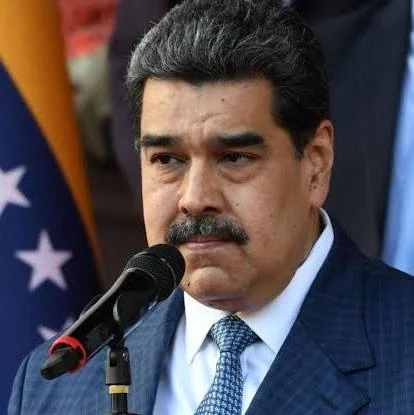
This historical context is essential when assessing the current escalation around Venezuela. Under Nicolás Maduro, Venezuela has been repositioned within U.S. strategic communications as a nexus of narcotics trafficking, authoritarianism, and regional instability. Sanctions, diplomatic isolation, and rhetorical escalation have followed. The question is not whether Venezuela faces internal governance challenges, it clearly does, but why it has been elevated to priority threat status relative to other Latin American states with long-documented drug-trafficking and corruption issues.
Mexico and Colombia, for example, have been central transit points in the global narcotics supply chain for decades. Yet they are framed as partners, not pariahs. The differentiator is not performance; it is alignment.
Venezuela’s political posture, resource nationalism, and resistance to U.S. influence, place it outside the preferred operating framework.
As in previous cases, moral arguments are bundled with security claims to build a compelling intervention narrative, while structural inconsistencies are downplayed.
From a strategic analysis standpoint, Venezuela exhibits multiple markers of the established playbook: leader demonisation, economic pressure through sanctions, regional coalition-building, and persistent signalling that “all options remain on the table.” Whether this culminates in direct intervention remains uncertain, but the sequencing is familiar. The risk is that Maduro becomes the third data point in a pattern where regime change is prioritised over system resilience, and where long-term regional stability is subordinated to short-term geopolitical wins.
The broader issue is one of global governance asymmetry. The United States continues to operate as a de facto enforcer in a system that lacks reciprocal accountability. International law is invoked selectively, humanitarian principles are activated contextually, and institutions are leveraged instrumentally. For nations that do not “see eye to eye” with Washington, the implicit message is clear: non-alignment carries escalating cost.
However, the operating environment is changing. The emergence of multipolar power centres, the growing assertiveness of the Global South, and increased public scepticism toward interventionist narratives are recalibrating the risk landscape. Legacy strategies built for unipolar dominance are yielding diminishing returns, while reputational exposure is increasing. The question is no longer how long the United States can sustain this approach, but how much strategic credibility it is willing to expend in doing so.
Legacy strategies built for unipolar dominance are yielding diminishing returns
In conclusion, Iraq, Libya, and Venezuela are not anomalies; they are case studies in how power communicates with itself and the world. For policymakers, scholars, and citizens alike, the imperative is to move beyond surface narratives and interrogate the structural logic beneath them. Without such scrutiny, the cycle will continue, new threats will be branded, new interventions justified, and old lessons ignored. In a system already under strain, that is a risk the global order can ill afford.