
From Monday, August 4 to Friday, August 8, 2025, Burundi endured a total nationwide blackout, electricity vanished from homes, offices, hospitals, and even morgues. In the capital, Bujumbura, entire neighborhoods lay in darkness, and in the political heart, Gitega, public services ground to a halt. This was not a minor power flicker, it was a full-scale systemic failure.
The five-day blackout was not just an inconvenience, it was a national embarrassment
…and a shocking revelation of a state in decline.
Even more unsettling than the darkness was the response, or lack thereof. State-owned Regideso attributed it to “connection work” expected to continue until August 14. Officials downplayed the failure as temporary maintenance, while many questioned the credibility of that explanation.
And behind the broken infrastructure were real human stories. In Rumonge, vendors watched helplessly as milk spoiled in powerless refrigerators, unable to preserve their livelihoods. In Gitega, citizens impatiently demanded answers, one resident remarked, “We can’t wait ten days in the dark.” At Prince Regent Charles Hospital in Bujumbura, grieving families were asked to collect bodies from an out-of-service morgue amid pitch-black corridors.
families were asked to collect bodies from an out-of-service morgue amid pitch-black corridors.
This blackout put a visible face to suffering. Aloys, a small-business clerk in Nyanza, lamented, “I have to feed my family, I can’t do it anymore because of the lack of electricity.” His words echo the frustrations of countless ordinary Burundians whose daily survival depends on basic services.
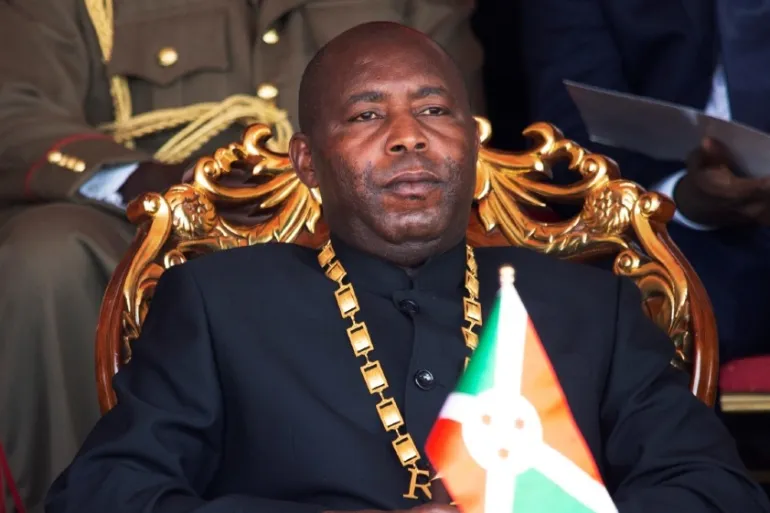
These stories expose deeper rot at the heart of governance. President Évariste Ndayishimiye, once seen as a reformer after Nkurunziza’s authoritarian reign, now faces mounting criticism. His promises of stability and progress ring hollow as citizens watch state institutions collapse around them. Leadership is not measured in speeches but in capacities, like keeping morgues chilled, markets open, and homes lit. On that measure, the government has failed.
The economic burden was immediate. Citizens already reeling from soaring fuel prices, estimated at 20,000 Burundian francs per liter on the black market, now also watched the cost of daily life skyrocket as businesses closed and services broke down. Inflation eroded savings, youth unemployment climbed, and the risk of hunger lurked with every passing dark hour.
This blackout stands as a stark metaphor, a government that cannot keep the lights on cannot keep the trust of its people. And when trust falters, frustration follows. Burundi’s resilient populace may have tolerated hardship, but five days of darkness, or dependence on silent generators and fading hope, may prove their limit.
The possibility of unrest can no longer be dismissed. Repression may hold for some time, but not indefinitely. When food spoils, hospitals close, and even death becomes harder to process, anger builds in the dark.
the darkness may deepen beyond the grid, into political collapse and social despair.
Meanwhile, the global community watched silently. A blackout of eleven million people barely registered on international radar, with few headlines and minimal outrage. Yet Burundi deserved more attention than this.
The August 4 to 8 blackout should be a wake-up call, not an isolated fiasco but a symbol of breakdown. If President Ndayishimiye and his administration cannot restore infrastructure, accountability, and trust, the darkness may deepen beyond the grid, into political collapse and social despair.