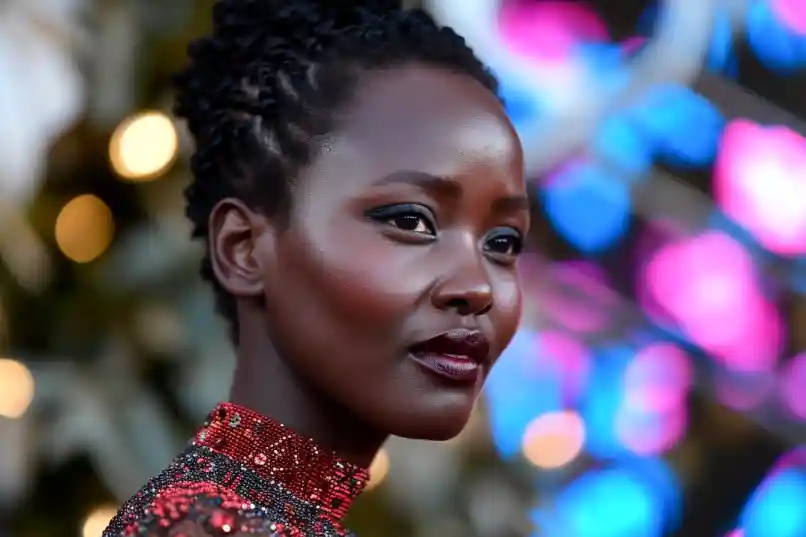
Lupita Nyong’o is more than just an Oscar-winning actress—she is a symbol of resilience, elegance, and empowerment. From her humble beginnings in Kenya to becoming a global star, she has redefined beauty standards, championed diversity, and used her influence to uplift marginalized voices. Her journey serves as a beacon of hope, proving that talent and determination can break through even the toughest barriers.
A Journey of Passion and Perseverance
Born in Mexico to Kenyan parents, Lupita was raised in Nairobi, where she developed a love for the arts. Despite societal pressures that often discouraged African women from pursuing careers in film, she remained steadfast in her dreams. She pursued higher education at Hampshire College and later attended the prestigious Yale School of Drama, a decision that would eventually catapult her into stardom.
Her journey serves as a beacon of hope, proving that talent and determination can break through even the toughest barriers.
Her breakthrough came in 2013 when she portrayed Patsey in 12 Years a Slave. The role was emotionally demanding, requiring immense depth and vulnerability. Lupita’s powerful performance not only moved audiences but also won her an Academy Award for Best Supporting Actress. This historic win shattered barriers for dark-skinned actresses in Hollywood and challenged industry norms about beauty and representation.
Lupita’s impact extends far beyond acting. As a dark-skinned woman in an industry long dominated by Eurocentric beauty ideals, she has been an outspoken advocate for self-love and confidence. In a heartfelt speech at Essence’s Black Women in Hollywood event, she recalled her struggles with self-image, revealing how she once wished for lighter skin as a child. However, after seeing South Sudanese model Alek Wek celebrated for her dark complexion, she realized that beauty comes in many shades.
She has since become a trailblazer in redefining global beauty standards. As the first Black woman to be the face of Lancôme, Lupita proved that mainstream fashion and beauty industries could embrace diversity. Her children’s book Sulwe, which tells the story of a young girl learning to embrace her dark skin, has resonated with millions and continues to inspire young readers worldwide.
Championing African Stories and Representation
Lupita is dedicated to changing the narrative about Africa in global media. Instead of the stereotypical portrayals of poverty and struggle, she has worked to showcase Africa’s richness, culture, and strength. Her roles in Black Panther and Queen of Katwe celebrated African excellence, heritage, and untold stories of triumph.
She is also an advocate for African literature, frequently spotlighting authors from the continent. Her involvement in the film adaptation of Chimamanda Ngozi Adichie’s Americanah highlights her commitment to sharing authentic African experiences with global audiences.
Lupita Nyong’o as a Humanitarian and Activist
Beyond the entertainment industry, Lupita has used her voice and platform to support important causes. She has been an advocate for women’s rights, racial justice, and refugee welfare.
In 2016, she partnered with WildAid to fight against elephant poaching in Kenya, promoting conservation efforts to protect African wildlife. She has also worked with organizations that support education for girls, particularly in underserved communities in Kenya and beyond.
Lupita has spoken out against sexual harassment and gender inequality in Hollywood, joining the #MeToo movement by bravely sharing her own experiences. She has continually used her global influence to call for gender equality, fair representation, and the protection of marginalized communities.
A Legacy of Inspiration
Lupita Nyong’o’s journey from a Kenyan girl with big dreams to a global icon is a testament to resilience, talent, and self-belief. She has defied expectations, broken barriers, and paved the way for many aspiring artists, especially those from underrepresented communities.
Her story is not just about fame—it’s about using influence to inspire, uplift, and empower others. Whether through film, literature, advocacy, or humanitarian work, Lupita continues to be a role model, proving that representation matters and that every individual has the power to shape their own narrative.