BRICS, the coalition of Brazil, Russia, India, China, and South Africa, is emerging as a formidable counterweight to the longstanding economic hegemony of the United States. Under Donald Trump, the U.S. adopted an “America First” policy that aggressively used sanctions, tariffs, and military might to shape global affairs. This approach, often characterized as the U.S. acting as the world’s global police, not only disrupted international trade but also deepened the economic dependency of many nations on the U.S. dollar.
Trump’s policies are designed to protect American industries and enforce compliance through economic might. High tariffs and unpredictable trade measures created uncertainty in global markets, leaving countries vulnerable to the whims of U.S. economic strategy. The reliance on the dollar, bolstered by the U.S.’s central banking power, allowed Washington to exert pressure on any nation that dared to diverge from its preferred economic path. Many emerging economies found themselves caught in a web of dependency, where their financial stability was closely tied to the health of the U.S. economy and its policy decisions.
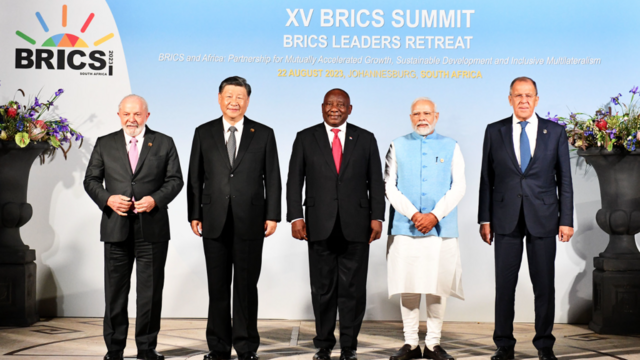
Against this backdrop, BRICS offers an alternative model—a framework for economic cooperation built on mutual benefit rather than unilateral dominance. By encouraging trade in local currencies, investing in its own development banks, and exploring innovative financial instruments, the bloc aims to reduce global reliance on the U.S. dollar. This dedollarization strategy not only protects member nations from volatile U.S. policies but also poses a direct challenge to American global power. As global demand for the dollar wanes, the U.S. could see a decline in its ability to finance deficits and impose economic sanctions, thereby weakening its geopolitical leverage.
Critics argue that the diverse political systems and economic priorities of BRICS members might undermine their collective strength. However, the bloc’s commitment to reforming global financial governance reflects a clear desire for a more balanced international order. While Trump’s America First policies sought to reinforce American supremacy through isolationist measures, BRICS symbolizes a shift towards a multipolar world where economic power is shared more equitably.
The potential of BRICS to reshape global finance extends far beyond mere trade. It challenges the legitimacy of the U.S.-dominated financial system and provides an avenue for nations to assert their economic sovereignty. This alternative approach is not just about building new economic alliances—it is about reimagining global power dynamics to create a more stable and inclusive international order.
In fact, as the world grapples with the legacy of Trump’s aggressive policies, BRICS and its dedollarization agenda stand as powerful counterforces to U.S. dominance. The coalition’s ability to offer a viable alternative to dollar dependency may well determine the future trajectory of global economic governance and reduce America’s role as the ultimate global arbiter.