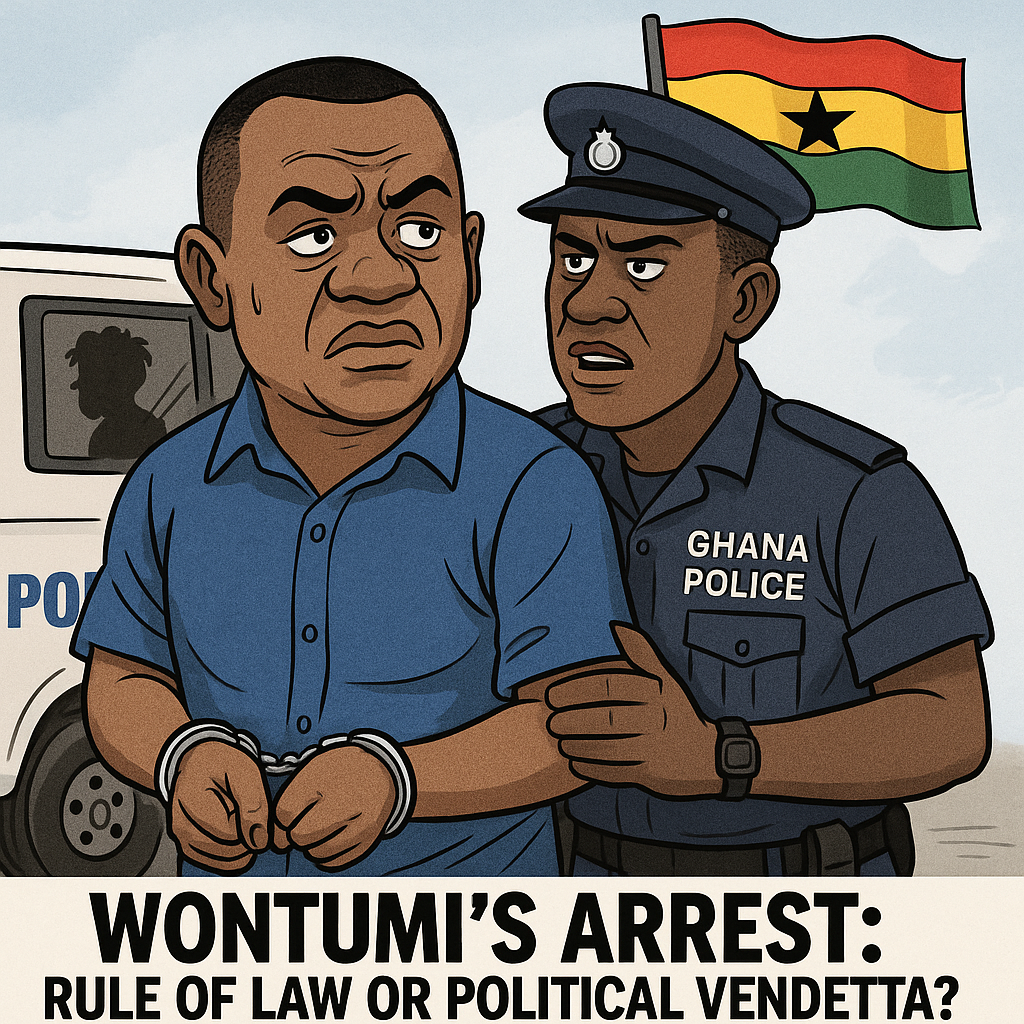
The recent arrest of Bernard Antwi Boasiako—popularly known as Chairman Wontumi—has thrown Ghana’s political landscape into fresh uncertainty. As a prominent businessman and Regional Chairman of the ruling New Patriotic Party (NPP), Wontumi’s influence reaches deep into the party’s grassroots and financial machinery. His detention by state security forces on 26 May 2025, reportedly over allegations of illegal mining and interference in state environmental operations, has sparked a political storm with wide-reaching implications.
Details of the arrest remain contested. While the Ghana Police Service claims due legal process, citing breaches of environmental protection laws linked to a controversial mining concession in the Ashanti Region, allies of Wontumi argue otherwise.
According to them, his arrest is a calculated political strike driven by internal party rivalries and external opposition pressure to weaken his growing dominance ahead of the NPP’s 2026 national congress.
Adding to the drama are statements from party loyalists, with some calling the arrest “a betrayal orchestrated from within.” Indeed, Wontumi’s confrontational style and firm grip over the Ashanti Region have made him both a kingmaker and a target. The question now is whether his arrest is about legal accountability—or a strategic silencing of a polarizing political figure.
The government, still finding its feet after the hotly contested 2024 elections, faces a critical test. Having campaigned on promises of justice and environmental reform, it must balance legal enforcement with public perception. Mishandling this case could deepen political divisions, fuel allegations of selective justice, and damage Ghana’s hard-earned democratic credentials.
Wontumi’s arrest also revives long-standing concerns over the politicization of law enforcement in Ghana. Ghana’s democracy has matured significantly over the past two decades, but selective arrests, especially of high-profile political actors, risk eroding public trust. Is this a genuine crackdown on illegal mining—galamsey—or the surfacing of political retribution disguised as law?
It’s worth comparing this moment to previous incidents: from the 2014 arrest of NDC financier Alfred Woyome to the controversial interdiction of NPP’s Kennedy Agyapong in 2021.
Each time, the state’s handling of politically sensitive legal matters tested democratic accountability and exposed the fragile line between justice and vendetta.
Wontumi’s case should not become another cautionary tale. The government must ensure transparency, due process, and impartial investigation. Civil society and the media must also remain vigilant, refusing to allow legal theatre to replace justice. After all, Ghana cannot afford to send the signal—especially to its youth, that power determines who gets punished.
This incident comes in the post-2024 electoral period, a critical phase for rebuilding institutional trust. As Ghana prepares for future political contests and governance challenges, the Wontumi affair will be remembered as a bellwether of whether the country chose rule of law—or partisan expediency.