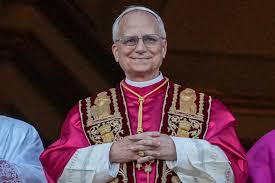
In a world fighting against inequaity, championing inclusivity and diversity in all spheres of life, the Roman Catholic Church, as a theological institution and a community, still remains a fortress of conservatism, where certain transformations creep in at a glacial pace. This is reflected by the recent selection of a lower-ranking position cardinal, a European decent, from within the College of Cardinals, as the new pope. This selection has stirred an undercurrent outrage and disappointment across the African Catholic community, who feel that African cardinals have been overlooked. As it is now, the selection of a new pope is no longer perceived as a matter of spiritual leadership, but that of a systemic exclusion, cloaked in canonical justifications, making African and non-European Catholics wonder whether, within the Vatican hierarchy, there is a silent conspiracy to deny them the papacy.
As it is, Africa has given Catholics Church its unwavering commitment global presence. According to the Pew Research Center (2018), Africa’s Catholic population grew by more than 238% between 1980 and 2017, now surpassing 236 million adherents, second only to Latin America. In countries like Nigeria, the Democratic Republic of Congo, and Uganda, Catholicism is not only a spiritual force but a societal cornerstone. Yet, in the face of such growth and loyalty, no African has ever been elected as a pope. This is despite the presence of deeply respected African cardinals such as Cardinal Peter Turkson (Ghana), Cardinal Robert Sarah (Guinea), and Cardinal Francis Arinze (Nigeria). All these three cardinals are higher in rank in comparison to the new pope. They have also held significant roles in the Vatican, and possess theological prowess, diplomatic experience, and global recognition. Cardinal Sarah, for instance, served as the Prefect of the Congregation for Divine Worship and the Discipline of the Sacraments until his retirement in 2021 and is widely known for his deep orthodoxy and global voice.
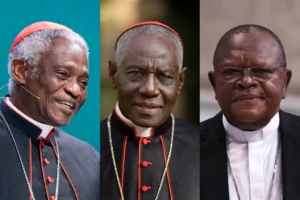
As it is, a pope is elected by the College of Cardinals, currently numbering over 130 voting members under the age of 80. The selection is conducted in secret conclave, requiring a two-thirds majority. While no official list of “qualifications” exists beyond being a baptised male Catholic (and traditionally a cardinal), the informal criteria include theological depth, administrative experience, and perceived “papal temperament.” But here lies the problem: these criteria are applied inconsistently. The newly elected pope, Pope John Paul II’s successor, comes from a European country with dwindling Catholic numbers, and ranking below the three African cardinals in seniority and administrative experience. Yet, he was elevated above them without clear justification. If merit were truly the cornerstone, why were Cardinals Turkson, Sarah, and Arinze passed over again?
It is not the first time African cardinals have been bypassed. After Pope John Paul II’s death in 2005, many believed Cardinal Francis Arinze was a strong contender.
Fluent in multiple languages and a close advisor to John Paul II, his profile was impeccable, however, the conclave chose Joseph Ratzinger, a German cardinal and head of the Congregation for the Doctrine of the Faith, later known as Pope Benedict XVI. In 2013, following Benedict’s resignation, Cardinal Turkson was again tipped as a frontrunner. Yet, the conclave chose Jorge Mario Bergoglio, the Archbishop of Buenos Aires, who became Pope Francis, the first from Latin America, yes, but still reflective of Euro-Latin heritage and European theological traditions.
Sadly enough, while the Catholic Church claims to be universal, the papal elections often mirror the geopolitics of power and cultural dominance. The preference for European leadership, even amid a global shift in Catholic demography, reveals an entrenched Eurocentrism. In the corridors of the Vatican, some insiders argue that African cardinals are “too conservative” or “divisive” in their views, particularly on issues like liturgy, same-sex unions, and interreligious dialogue. Yet this is a smokescreen. Conservative European cardinals continue to rise, and “divisiveness” seems only to be a problem when it comes from Africa.
It now appears that the implicit bias is not about spiritual or theological leadership, but about power and control of Catholicims.
Since the Catholic Church is the Rome-first power structure, letting papacy go to Africa is surrendering such power and control to “outsiders”. As Pope Francis himself has preached, “The Church is not a fortress, but a field hospital.” If so, then it must treat the wounds of exclusion, not deepen them. Until the Vatican truly becomes a reflection of the global face of Catholicism, the Church’s moral authority will remain incomplete, and the millions of African Catholics will continue asking, “There is a new pope, but where is ours?”