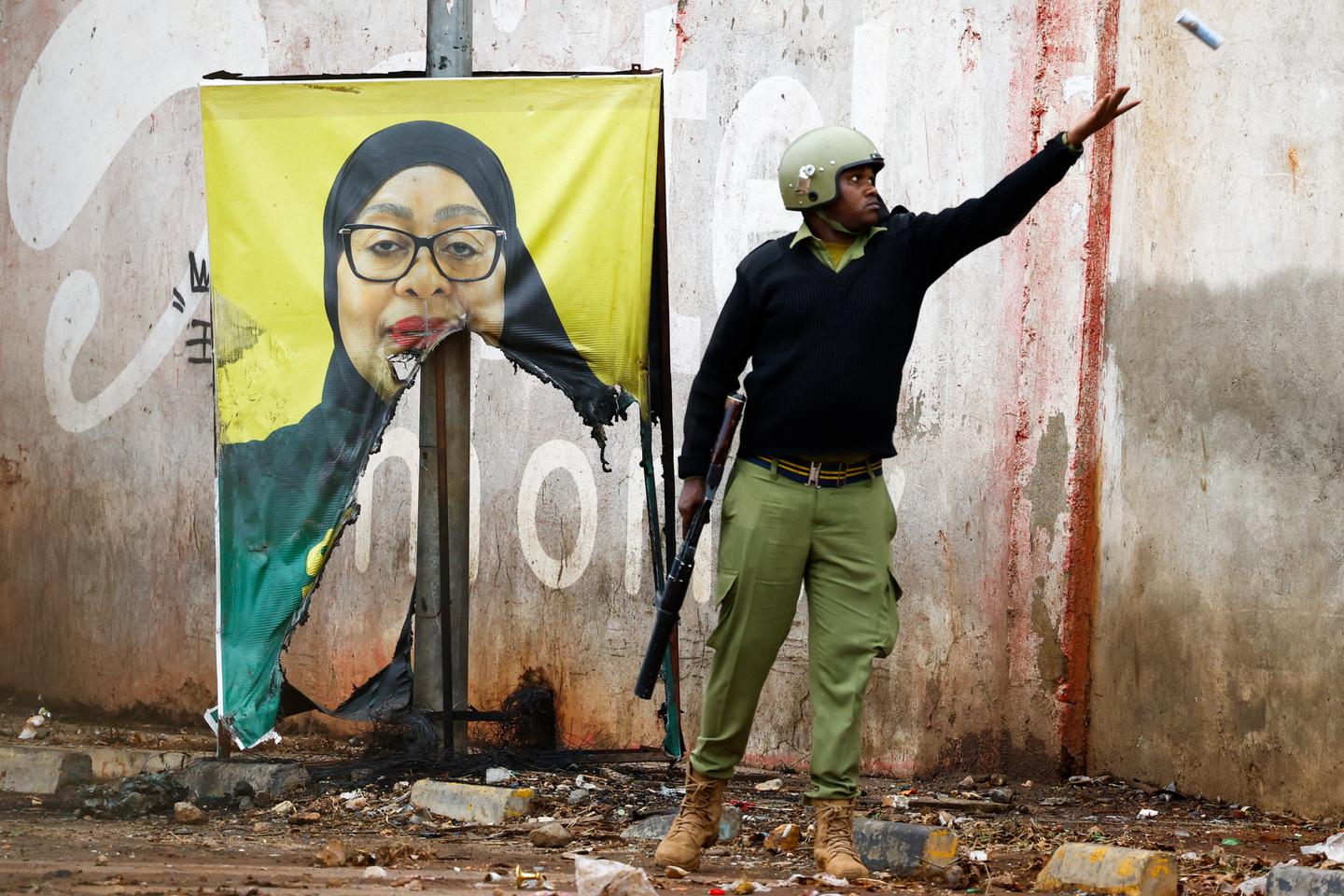
At her inauguration in 2021, Samia Suluhu Hassan—Tanzania’s first female president—was widely billed as a fresh, moderate face. After the death of John Magufuli, whose presidency was marred by heavy-handed rule and suppression of dissent, Suluhu’s accession came with the promise of change: lifting media bans, opening space for the opposition. Yet today, that promise rings hollow. What once seemed like the emergence of a tolerant democrat has fast become something far darker: a leader accelerating a transition toward autocracy, with tactics that now threaten to rival those of Uganda’s Yoweri Museveni.
President Suluhu’s tactics that now threaten to rival those of Uganda’s Yoweri Museveni.
Suluhu’s early steps gave hope. In January 2023 she lifted a six-year ban on opposition rallies, an act welcomed by rights groups as a sign of change. But that thaw was short-lived. Soon, the tools of repression began to resurface: arrests of opposition leaders, shrinking civic space, and an electoral process that appears increasingly engineered in favour of the ruling party.
Consider the case of the largest opposition party, Chama cha Demokrasia na Maendeleo (CHADEMA). Its chairman Freeman Mbowe has repeatedly been subject to arrest and detention under broad and politically-charged charges. In July 2021 he was arrested on “terrorism-related” charges after planning a meeting on constitutional reform. In September 2024 he was arrested again ahead of a planned protest against abducted opposition members. These arrests are less about the rule of law than about silencing dissent.
The narrative is clear: opposition figures speak out, and they face consequences. The pattern strongly echoes Museveni’s Uganda, where the ruling party has, for decades, managed opposition by intimidation, legal harassment, and exclus
The narrative is clear: opposition figures speak out, and they face consequences
Yet the more alarming shift is how this authoritarian reflex now targets others beyond traditional opposition politicians. Enter the case of Jenifer Bilikwiza Jovin, widely known by her social-media handle “Niffer”. A 26-year-old businesswoman and influencer, Niffer seemed an unlikely candidate for the state’s crackdown. Yet in October 2025 she was arrested in Dar es Salaam, accused of incitement, vandalism and ultimately treason, specifically for allegedly mobilising youth to disrupt the general election and for encouraging purchases of tear-gas protection masks from her shop.
A 26-year-old businesswoman and influencer, Niffer seemed an unlikely candidate for the state’s crackdown.
The charges against her read like a dystopian expansion of state power: an influencer branded a threat to national security. The police statement and court filings say she was part of an alleged plot: “conspiring to commit offence of damage to infrastructure” and “obstructing electoral process”. Though not a high-profile politician, her case signals the same message: the tools of the security state are now extended to civilians, activists, digital voices who challenge the status quo.
Why does this matter? Because this is not an isolated incident—it is a sign of structural change. When the state formalises such charges and deploys them against non-traditional targets, it sends a chilling message: your voice, your civic expression, your dissent, even indirect, is a threat. Thus, what began with opposition politicians now reaches the broader society.
In the Tanzanian context, this is particularly dangerous. The October 29 2025 election occurred under a cloud of crackdown: reports of internet shutdowns, a banned opposition party, and hundreds of arrests followed by treason charges against scores of alleged dissidents. The post-election environment suggests Tanzania has crossed a threshold: from flawed democracy to managed autocracy.
Returning to President Suluhu: her transformation is stark. The soft-spoken reformer is increasingly replaced by a hard-edged leader intolerant of dissent. The detentions of Mbowe and Lissu, the latter jailed for treason in April 2025 after calling for electoral reforms, show how conventional opposition is being subdued. The arrest of Niffer further underscores the regime’s widening appetite for suppression. The message is unmistakable: dissenters will be punished.
The soft-spoken reformer is increasingly replaced by a hard-edged leader intolerant of dissent.
What about the justification? Officially, these arrests and charges serve to preserve national stability, prevent violence or “foreign interference”, and uphold the electoral process. But in practice, they resemble the very playbook of authoritarian consolidation: link dissent to criminality, build a narrative of external threat, neutralise key opponents, and repeat before elections. And for Tanzania, this is happening quickly.
Moreover, the regional implications are worrying. As Tanzania drifts away from the normative-liberal model of governance, it sets a precedent for other African states. If Suluhu’s Tanzania is allowed to flourish while dismantling democratic safeguards, it becomes a blueprint for others seeking to retain façade democracy while hollowing out internal freedoms.
For Tanzanians, the cost is clear: freedom of expression, assembly and political contest are at risk. The victim may be an influencer, like Niffer, or a labour unionist, a student activist, a local opposition leader. But the effect is the same: a society that increasingly self-censors, a civic sphere that emits fear rather than engagement.
The popular expectation of a “new democracy” is evaporating.
What should happen now? Tanzanian civil society and regional bodies must sound the alarm. International observers and multilateral institutions, such as the International Criminal Court monitoring allegations of post-election violence, must not allow the narrative of stability to override calls for accountability. The world must see that the danger is less in wholesale collapse than in quiet erosion.
President Suluhu still has a final chance: restore transparent investigations into the arrested, revise draconian laws used against civic actors, release individuals charged under politically-motivated offences, recommit to meaningful political reform rather than cosmetic gestures. If she fails, Tanzania risks joining the ranks of refused democracies, regimes where elections happen but freedom does not.
the “soft-spoken democrat” will instead be remembered as the architect of Tanzania’s democratic undoing.
In the end, citizens must also step forward, not with mob protests, but through organised civic action, voting under constraint, holding the system accountable. The stakes are high: a country once promised democratic renewal now stands at the precipice of autocratic regression.
Tanzania is watching. The world is watching. And the test for Suluhu is this: will she reclaim her reformist mantle, or will she preside over the consolidation of power she once repudiated? Because if she continues down this path, the “soft-spoken democrat” will instead be remembered as the architect of Tanzania’s democratic undoing.