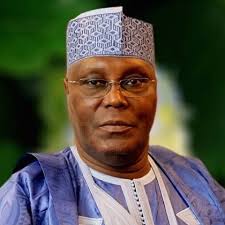

The recent statement by an All Progressives Congress (APC) chieftain mocking former Vice President Atiku Abubakar’s “desperate search” for a Southern running mate has ignited renewed debates about the character of Nigerian politics. With the 2027 general elections drawing closer, this accusation, partly ridicule, partly political warning, has stirred both criticism and intrigue. But beneath the sarcasm and soundbites lies a much more complex question: is Atiku’s alleged search for a Southern running mate a mark of desperation, or a calculated political strategy?
For many Nigerians, the comment from the APC camp seems like yet another round of the usual pre-election theatrics, designed to delegitimise the opposition and undermine its internal decisions. However, in a country like Nigeria, where regional identity, religion, and ethnicity significantly shape electoral outcomes, the selection of a running mate is more than just a formality.
It is a statement of intent, a test of inclusivity, and a bold attempt to strike the right balance between electoral mathematics and national unity.
Atiku’s Balancing Act
Atiku Abubakar, who has run for Nigeria’s presidency multiple times, is no stranger to political maneuvering. As a northerner from Adamawa State and a Muslim, his potential choice of a Southern Christian running mate is not only expected but necessary for maintaining the religious and regional balance that Nigerian voters demand. This political tradition, while not legally required, has become an unspoken rule—one rooted in the country’s diverse and often divisive identity politics.
The 2023 elections saw Bola Ahmed Tinubu, a Southern Muslim, pair with Kashim Shettima, a Northern Muslim—breaking the long-standing Christian-Muslim ticket model. That decision, while successful electorally, came with heavy criticism, particularly from Christian communities who felt excluded. Atiku, representing the People’s Democratic Party (PDP), now seems determined not to repeat that mistake.
Is It Desperation or Democratic Outreach?
Desperation, as claimed by the APC chieftain, implies panic, a lack of viable options, and a scramble for electoral advantage. But that interpretation may be too simplistic. Atiku’s reported consultations with Southern political heavyweights—from the South-East to the South-South—could also be read as a sign of political maturity. After all, democratic politics thrives on negotiation, coalition-building, and strategic alliance.
Given the PDP’s performance in the last general election and the growing influence of Labour Party candidate Peter Obi—especially in the South-East—it makes sense that Atiku would want to rebuild trust in Southern Nigeria. Many Southerners, particularly Igbos, felt alienated by the PDP’s decision to zone the presidential ticket to the North in 2023. Re-engaging this bloc through the choice of a respected, competent Southern running mate might not just be strategic—it might be essential for political survival.
The Southern Calculus
Southern Nigeria is not a monolith. The South-West, largely dominated by the APC through Tinubu’s influence, might not be fertile ground for Atiku’s vice-presidential pick. The South-East and South-South, however, offer opportunities. If Atiku were to choose a running mate from these regions—someone with mass appeal, credibility, and grassroots support—he could potentially reclaim lost ground and galvanize disenchanted PDP loyalists.
Names like Ifeanyi Okowa, Peter Obi (should he return to PDP), or even newer-generation leaders from the Niger Delta have been floated.
Each choice comes with advantages and risks. But one thing is clear: Atiku cannot afford a tokenistic selection. He needs a partner who can energize the base, unify fractious zones, and appeal to younger voters frustrated by years of unmet promises.
Mockery or Motivation?
Political mockery is not new in Nigeria’s democracy. It often serves to distract, mislead, or intimidate. But in this instance, APC’s ridicule may only add fuel to Atiku’s fire. If anything, it affirms the significance of the Southern vote—and the necessity for all candidates to take it seriously. Rather than being shamed for “shopping” for a Southern running mate, Atiku may in fact be reading the national mood better than his critics care to admit.
Ultimately, the 2027 elections will not be decided by sarcasm or spin. They will be won by the party that understands Nigeria’s diversity and responds with empathy, strategy, and vision. If Atiku’s quest leads him to a credible Southern partner with integrity and mass appeal, history may judge his so-called desperation as the beginning of a smart and inclusive comeback.