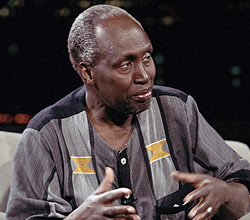

The African continent has lost a literary giant, a fearless intellectual, and a tireless defender of its linguistic soul. Professor Ngũgĩ wa Thiong’o, the Kenyan-born author, academic, and activist, passed away at the age of 86, leaving behind a legacy deeply woven into the political and cultural tapestry of Africa. His death marks the end of an era, but his words, convictions, and vision will echo through generations.
Rest in power, Ngũgĩ. You wrote for Africa. And Africa will never forget.
A Voice Born in Turbulence
Born James Ngugi in 1938 in Limuru, Kenya, during the height of British colonial rule, Ngũgĩ’s formative years were shaped by war, dislocation, and resistance. He lived through the Mau Mau uprising, witnessing firsthand the cruelty of colonialism and the betrayal of post-independence dreams. These experiences formed the bedrock of his political and literary voice, a voice that would later challenge systems of oppression far beyond Kenya’s borders.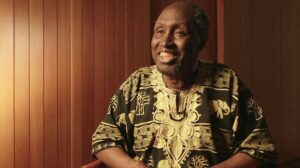
He studied at Makerere University in Uganda and later at the University of Leeds in the UK, where he immersed himself in postcolonial theory and world literature. It was here that he began questioning the foundations of Eurocentric education and the erasure of African narratives and languages.
The Turning Point: From English to Gikuyu
Ngũgĩ’s early novels, such as Weep Not, Child and The River Between, written in English, established him as a powerful new voice in African literature. But his awakening came with the realisation that language was not neutral—it was a weapon. In his seminal work, Decolonising the Mind (1986), Ngũgĩ argued that colonialism’s most insidious tool was linguistic domination. He stunned the literary world by announcing he would no longer write in English, instead dedicating himself to writing in his native Gikuyu.
Ngũgĩ argued that colonialism’s most insidious tool was linguistic domination.
It was a radical act. For Ngũgĩ, writing in Gikuyu was not merely a linguistic choice; it was an ideological stance—one that sought to return agency to the African reader, to place indigenous culture at the heart of African storytelling.
Detention Without Trial: The Price of Dissent
Ngũgĩ’s commitment to the people extended far beyond literature. In 1977, after co-authoring the politically charged Gikuyu play Ngaahika Ndeenda (I Will Marry When I Want)—which critiqued class inequality and corruption—he was arrested by the Kenyan government and detained without trial in Kamiti Maximum Security Prison for over a year.
In prison, he famously wrote Devil on the Cross on toilet paper, marking his first full-length novel in Gikuyu. His detention highlighted the power of literature to threaten unjust regimes. Even after his release, Ngũgĩ was forced into exile for over two decades, living and teaching in the United States, where he continued his advocacy for African liberation and cultural sovereignty.
The Academic and the Firebrand
Ngũgĩ was not just a writer but a teacher and mentor who inspired students across continents. He taught literature and comparative studies at Yale, New York University, and the University of California, Irvine, where he held a distinguished professorship. He was a sought-after speaker, delivering lectures that blended scholarship with urgent political commentary. His academic work reinforced his belief in the centrality of African languages in intellectual production.
Ngũgĩ was forced into exile for over two decades, living and teaching in the United States,
Through his essays, memoirs, and public addresses, he constantly challenged African governments, Western academia, and global publishing industries to rethink their complicity in the marginalisation of African voices.
The Man Behind the Ideas
Away from the stage and page, Ngũgĩ was a deeply committed family man. He is survived by his wife Njeeri wa Ngũgĩ, herself an academic and activist, and their children—several of whom have followed in their father’s footsteps as writers and thinkers. Despite facing threats, exile, and even a violent attack during a return visit to Kenya in 2004, Ngũgĩ remained grounded, generous, and devoted to his loved ones.
His family life was deeply intertwined with his political journey. Njeeri stood by him through exile and adversity, and their partnership became a model of intellectual companionship and resilience.
A Legacy Etched in Ink and Struggle
Ngũgĩ’s passing comes at a time when questions of cultural identity, language, and liberation are more urgent than ever. His life was a testament to the belief that art is not just for beauty—it is for battle, for memory, for liberation. He transformed the classroom into a battleground for decolonisation and turned the novel into a manifesto for the oppressed.
His body may have left us, but his spirit—carved into the pages of Matigari, Petals of Blood, and Decolonising the Mind—remains indestructible.
In remembering Ngũgĩ wa Thiong’o, we are reminded that the struggle for cultural freedom continues. And we are reminded that language, in the hands of the committed, can become a tool of resistance and resurrection.
Rest in power, Ngũgĩ. You wrote for Africa. And Africa will never forget.