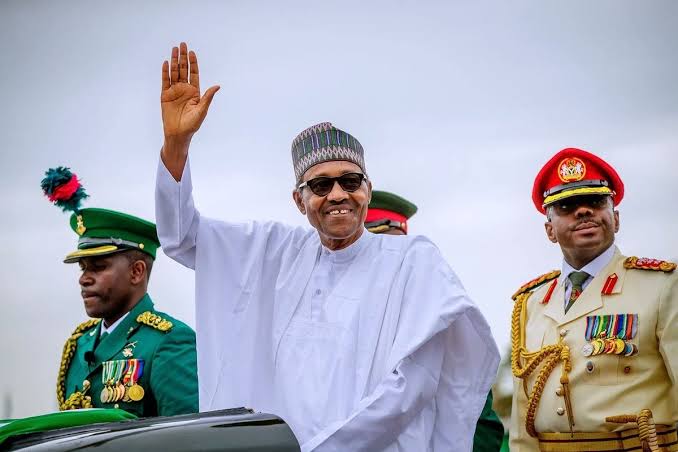
In the sprawling mosaic of Nigeria’s political evolution, few figures have cast as long and complex a shadow as General Muhammadu Buhari. Soldier, ruler, reformist, and enigma, his legacy is woven into nearly every chapter of Nigeria’s post-independence history. His death, followed by an unassuming and humble burial, marks the close of an era that will be remembered as much for its quiet convictions as for its missed opportunities.
His life was Nigeria’s mirror: flawed, determined, unfinished
General Buhari first appeared on the national stage in December 1983, when, as a young major-general, he led a coup that toppled a democratically elected civilian government. It was a turbulent time, rife with economic crisis, corruption, and disillusionment. Buhari’s regime promised discipline and order. His “War Against Indiscipline” was both his trademark and his cudgel, restoring public morality and accountability in the public sector with an iron grip. Yet, his military rule was also marked by authoritarian overreach: journalists jailed, civil liberties suppressed, and dissent crushed under military boots. In 1985, he was deposed in a bloodless coup by General Babangida.
But Buhari was not finished. Thirty years later, in a dramatic twist of democratic redemption, he returned to power through the ballot box, defeating incumbent Goodluck Jonathan in 2015. His victory was historic, he became the first opposition candidate to defeat a sitting president in Nigeria. The nation celebrated his ascension as a symbol of anti-corruption, integrity, and hope for a more accountable government.
His presidency, however, was not the unblemished crusade many had imagined. While Buhari brought a sense of moral rectitude to the presidency, his government was often criticized for being sluggish, insular, and tone-deaf. The early momentum of anti-corruption campaigns was bogged down by bureaucracy and allegations of selective justice. His economic policies were conservative and at times reactive, tight foreign exchange controls, sluggish diversification efforts, and a reliance on oil revenue kept the economy vulnerable. Nigeria entered two recessions under his watch, and youth unemployment surged to historic levels.
Perhaps the most poignant chapters of his presidency came during his long periods of illness.
Perhaps the most poignant chapters of his presidency came during his long periods of illness. In 2017, General Buhari spent several months in London receiving medical treatment for an undisclosed condition, sparking intense speculation and anxiety back home. His illness became symbolic of the state of the nation, ailing, opaque, and in limbo. Yet, even during these absences, General Buhari remained the quiet center of national attention, his return often greeted with mixed feelings of relief and renewed skepticism. He rarely addressed the public emotionally or directly, leading critics to label him as aloof or detached, particularly during key national crises such as the #EndSARS movement or growing insecurity in the North.
In death, he chose humility over grandeur
Nevertheless, General Buhari’s austere personal life and reputation for integrity remained largely intact. Unlike many of his contemporaries, he lived simply and shunned excessive wealth or flamboyance. His modest lifestyle stood in stark contrast to the excesses of Nigeria’s political elite and was perhaps one of the few consistencies in his long public life.
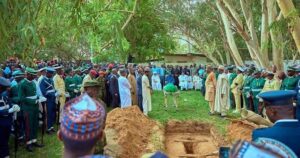
In death, he chose humility over grandeur. General Muhammadu Buhari was buried with little fanfare, in accordance with Islamic rites and personal wishes. No golden casket, no towering mausoleum, just the earth, prayers, and silence. It was a farewell befitting a man who, despite holding the nation’s highest office twice, first as a general, then as a president, often spoke more through action (and sometimes inaction) than rhetoric.
What, then, will he be remembered for? His admirers will cite his incorruptibility, his discipline, and his commitment to national unity. His critics will recall his rigidity, his silences, and his tendency to centralize power. But above all, Buhari will be remembered as a paradox: the military ruler who returned as a democrat, the austere leader who lived modestly in a time of greed, and the man who exited quietly from a stage he once dominated.
His life was Nigeria’s mirror: flawed, determined, unfinished.