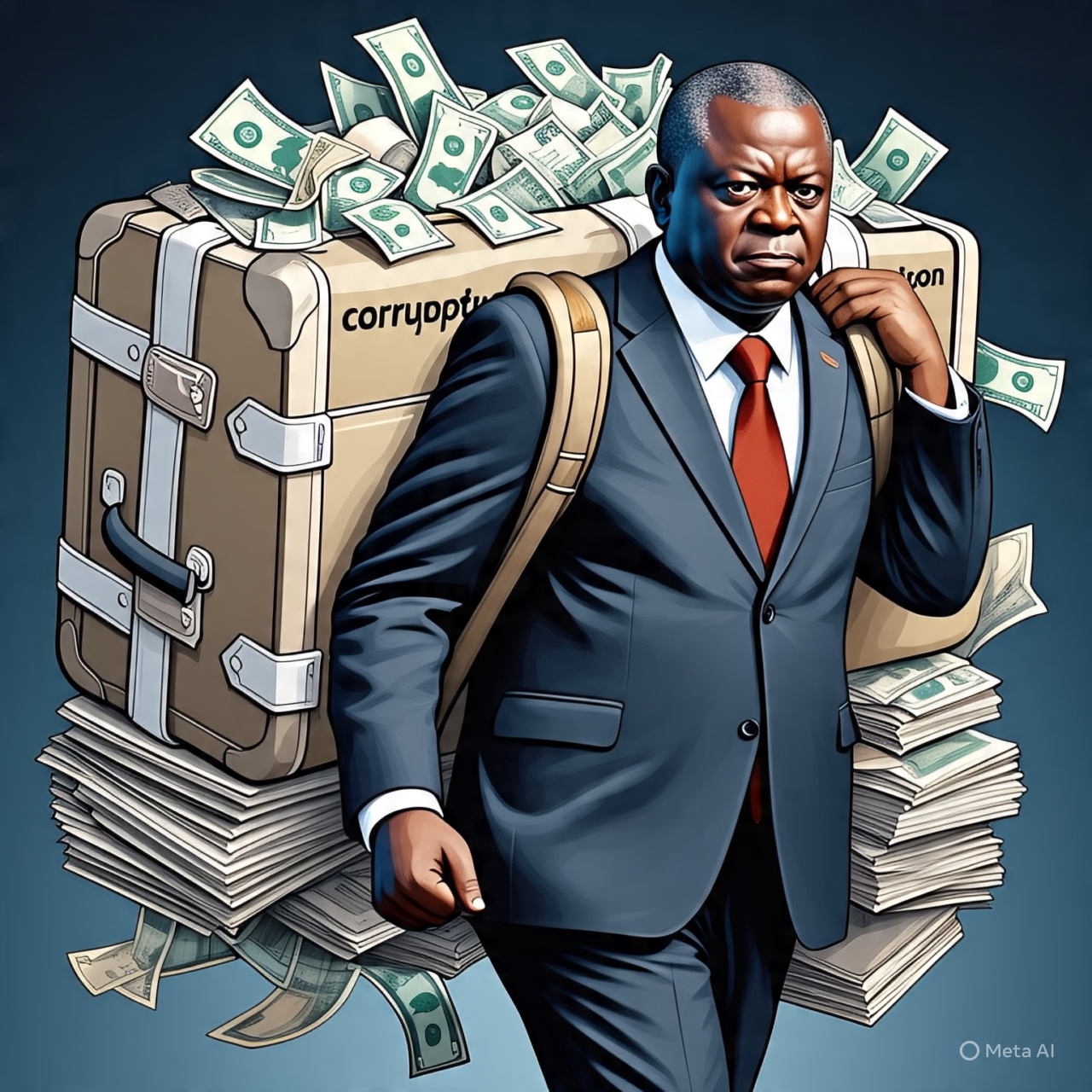

Once hailed as a symbol of new beginnings, Prime Minister Sam Matekane’s leadership in Lesotho is now under heavy scrutiny as the country grapples with an escalating corruption crisis. Elected in 2022 with a pledge to eradicate corruption and usher in transparency,
Matekane’s administration has failed to translate promises into tangible reforms. Two years into his tenure, the rot within state institutions appears more deeply entrenched than ever,
raising questions about whether the Prime Minister is unwilling, unable, or complicit in confronting the challenge.
In 2024, the Directorate on Corruption and Economic Offences (DCEO) launched a major investigation into financial irregularities at the Lesotho Electricity Company (LEC). Reports revealed inflated contracts, ghost workers, and funds being siphoned through fictitious projects. While evidence was compiled and presented, no significant legal actions have been taken. The case stalled, exposing the DCEO’s limitations, its lack of prosecutorial power, minimal funding, and frequent political interference. Senior officials implicated in the scandal remain in their posts, casting doubt on the government’s commitment to justice.
Another emblem of institutional failure is the scandal that emerged from the National Coronavirus Economic Council (NACOSECC), which was created to manage emergency COVID-19 relief. Millions of maloti intended to assist vulnerable communities were misappropriated. Investigations uncovered widespread embezzlement by senior bureaucrats, yet none have been brought to justice. The Auditor-General’s 2024 report flagged these discrepancies,
but Parliament has taken no action, with whistleblowers citing fear of retaliation and a culture of silence.
Transparency International’s 2024 Corruption Perceptions Index placed Lesotho at 99th out of 180 countries, with a dismal score of 37 out of 100. This ranking reflects the country’s deteriorating governance structures and an alarming lack of political accountability. Critics argue that despite mounting evidence of wrongdoing, the state machinery continues to protect the elite while suppressing calls for justice.
Prime Minister Matekane, once a successful businessman turned politician, has been accused of retreating from his reformist stance. His reluctance to overhaul weak institutions or support stronger investigative mandates for the DCEO has raised suspicions. Civil society organizations and opposition leaders are increasingly questioning whether he has been captured by the very networks he vowed to dismantle. Some observers even suggest that elements within his own party are beneficiaries of state capture, creating a conflict of interest that paralyzes decision-making.
In a statement issued by the United Nations Office on Drugs and Crime (UNODC) in early 2025, Lesotho was urged to prioritize anti-corruption reforms, strengthen the independence of the judiciary, and protect anti-graft bodies from political manipulation. However, such recommendations remain largely symbolic in the absence of genuine political will.
The ripple effects of unchecked corruption are evident across sectors. In the health system, patients are forced to pay bribes for basic services. In education, public funds earmarked for school infrastructure often disappear without trace. The business environment has deteriorated, with foreign investors increasingly wary of opaque procurement processes and the risk of political instability.
The Prime Minister’s defenders argue that his administration is hamstrung by entrenched corruption that predates his tenure. However, this justification is wearing thin as more scandals surface and public frustration grows. Protests in Maseru and other towns have become frequent, with youth movements demanding greater transparency and leadership accountability.
Lesotho stands at a pivotal moment in its democratic journey. If current trends persist, the erosion of public trust and international credibility will deepen. The economy, already fragile, may suffer fur
Matekane risks being remembered not as a reformer, but as a leader who watched as corruption corroded the very soul of his nation.